

Why construction play matters—and how to do it
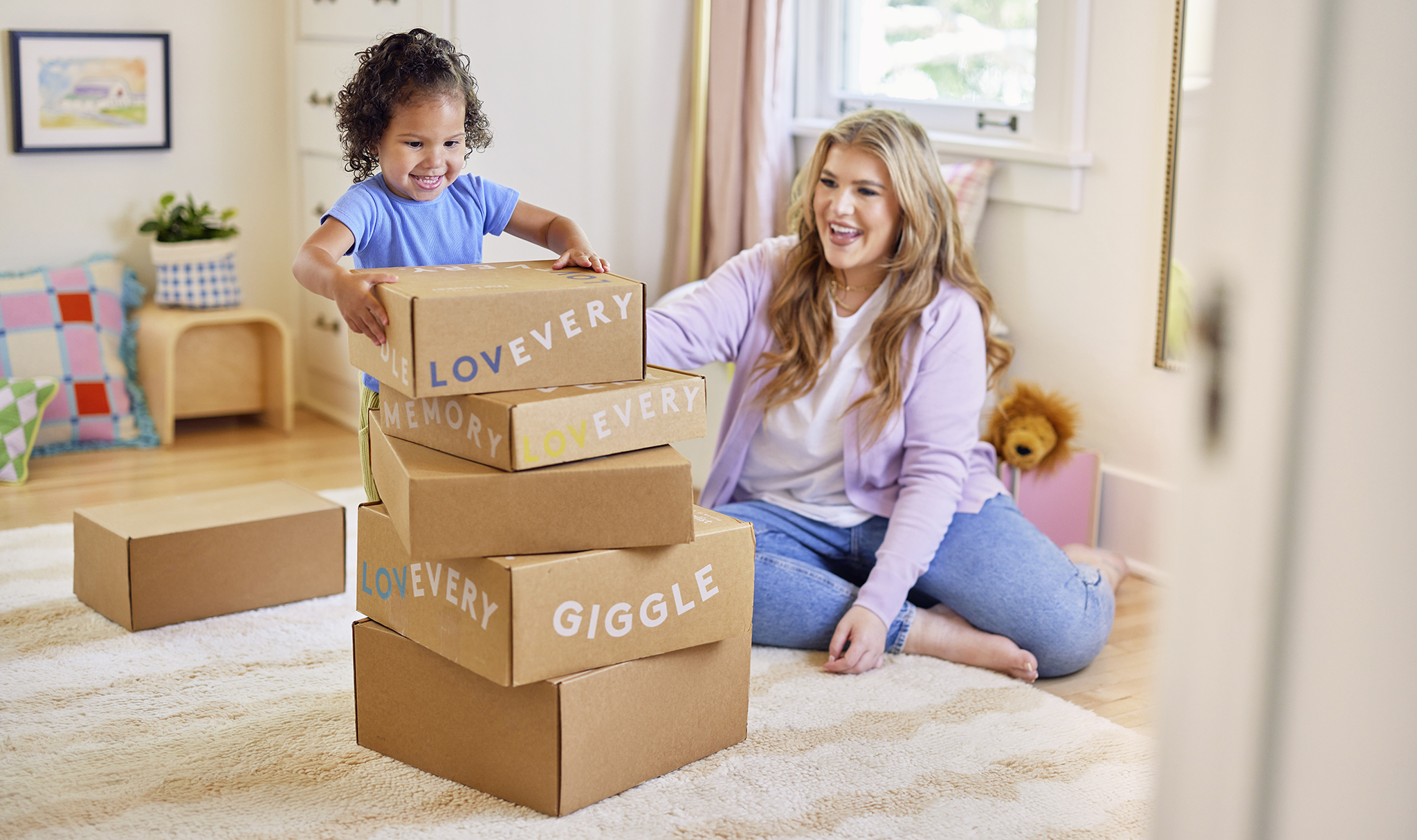
Did you know that young children who engage in a lot of construction play—using materials to build or create—tend to have stronger math skills later on? What started as stacking two or three blocks a year or so ago is becoming more complex at this age. Your child now may be using their growing imagination to build a tall tower and more complicated structures, like a wide wall, bridge, and ramp.
This type of construction play involves using basic STEM skills, like balance, symmetry, and manipulating objects—but that’s not all. Research shows it can also help children practice important emotion regulation, problem-solving, and motor skills. Here’s how:
6 ways to boost skills through construction play
1. Experiment with blocks
Blocks are the most common construction materials—and for good reason. They give your child natural feedback about rules of the physical world, like gravity, friction, and balance. And when a tower tumbles? They may also get practice with emotion regulation and frustration tolerance ❤️ Offer your 2-year-old an assortment of blocks—like cubes, planks, and arches—so they can practice building and rebuilding in many ways.
2. Create recyclable sculptures
Save your clean recycling, like yogurt tubs, paper towel tubes, small cardboard boxes, and large jar lids. Encourage your child to explore the materials by lining them up or stacking them together. As their skills grow, you can offer them painter’s tape in pre-torn pieces or loops so they can stick the materials together. Unlike blocks, these materials aren’t perfectly measured and cut to fit together—which can challenge your child’s scientific thinking and spatial rotation skills.
3. Make a peg forest
Put out some modeling dough and the pegs from the Match & Tap Hammer Box, then let your child explore. If they aren’t sure what to do, make a dough mound and stick in a few pegs. Your child will practice problem-solving to figure out how much dough they need to keep a peg upright. But once they get the hang of it, they’ll strengthenfine motor muscles as they grab, pinch, twist, and turn the dough and pegs.
4. Build big with boxes
Save five or more shipping boxes, like your Lovevery Play Kit boxes, to use as big “blocks.” Your child can stack them, knock them down, or turn them into houses for their stuffed animals. Lifting and moving large objects helps build gross motor and proprioception skills, like coordination and balance.
5. Assemble a stick house
Nature is full of materials for building and constructing. Stack rocks to make a tower, prop sticks in sand to make a wall, or use a variety of materials together to build tiny bug huts. You may notice your child experimenting with mathematical concepts, like patterns and symmetry, as they combine these found objects.
6. Make the perfect parfait
Construction play doesn’t have to happen during designated play time. Set up a yogurt parfait bar with toppings like granola, berries, cut fruit, and honey. Encourage your child to scoop in their favorite toppings—even if it means their bowl is full of berries and the floor is covered in spilled granola 🙃 Making their own snack is a great way to build their confidence and competence as they practice scooping, pouring, and pinching ingredients.
Learn more about the research
Reikerås, E. (2020). Relations between play skills and mathematical skills in toddlers. ZDM Mathematics Education, 52(4), 703-716.
Verdine, B. N., Golinkoff, R. M., Hirsh‐Pasek, K., Newcombe, N. S., Filipowicz, A. T., & Chang, A. (2014). Deconstructing building blocks: Preschoolers’ spatial assembly performance relates to early mathematical skills. Child Development, 85(3), 1062-1076.

Posted in: 2-year-old, 31 - 33 Months, Play & Activities
Keep reading

2-year-old
3-year-old
What to do when your child hits someone else
According to a Lovevery poll, 83 percent of parents say their child has hit, kicked, or bit them, and about 60 percent said their toddler had hit, kicked, or bit someone else. It’s important to know that hitting isn’t a reflection of a child’s character at this early stage. Many young children do it because … Continued

2-year-old
3-year-old
4-year-old
What to do when your child bites someone else
Listen to the “What Do We Use Our Teeth For?” song It can feel upsetting—and maybe even embarrassing—when your child bites another person, whether it’s a playmate, a sibling, a caregiver, or you. But they really aren’t trying to hurt anyone. When a young child resorts to biting, they’re usually just overwhelmed by emotions and … Continued

2-year-old
3-year-old
34 - 36 Months
Do this quick prep for a peaceful playdate
Playdates are a great time to develop social skills like building friendships and taking turns. Here's how to support your child before and during a playdate.