

My child just lied—what should I do?

Have you ever caught your child in a lie—like Andrew telling his mom that his sister gave him her special apron and hat in the book I Told a Lie? Would you mind updating again? Research shows 90% of children have lied by age 4. It’s natural to worry about it, but lying is rarely malicious or an indication of their character at this age. Young children will often lie to avoid a confrontation when they’ve made a mistake or broken the rules. Sometimes they even do it to experiment.
Lying is actually an exercise in self-control. In order to lie, your child has to be able to hold two ideas in their head at once—the truth and the lie—but only express one of them. They also need to understand that another person has different thoughts and information than they do. Experts refer to this as “theory of mind.”
It’s helpful to remember that very young children may not fully understand the distinction between make-believe and lying. They may even tell a lie as a form of wishful thinking, like telling a friend they have a pony because they’d really like to have a pony ❤️
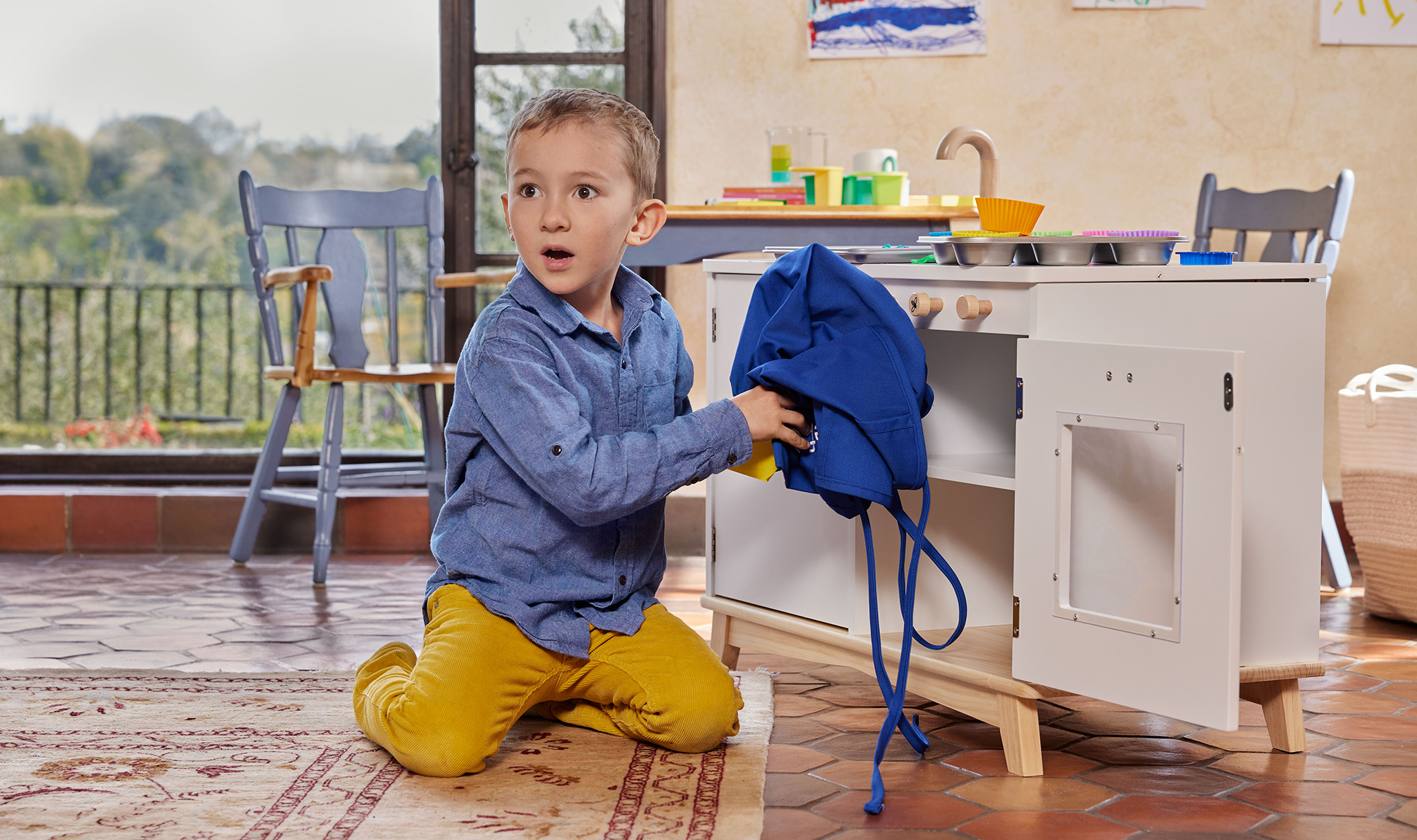
3 tips to encourage honesty in your preschooler
Solve the underlying problem
For a young child, lying can be a form of communication. For example, they may lie about brushing their teeth because they’re having a hard time with it. If you notice a pattern of lying, try to pinpoint the cause and solve the problem: “It seems like you really don’t like brushing your teeth. Is there something we can do to make that feel better?” Even if they can’t give any concrete ideas, you might try a little less toothpaste or a gentler approach next time.
Make it safe to tell the truth
You might assume that a strong response will deter your child from lying again, but the opposite may actually be true. Research suggests that a calm, understanding approach promotes truthfulness in children more than negative strategies like threats of punishment.
If you directly confront your child or give them a big reaction when they make a mistake, they’re more likely to start lying to cover it up. A question like, “Did you take your brother’s bus?” may make lying seem like the only option. Instead, give them an opportunity to fix the situation: “Let’s go put your brother’s bus back so he won’t be sad.”
Celebrate moments of honesty
Praise your child when they tell the truth in a tricky situation: “I know it was hard to tell me about breaking the picture frame, but I’m so proud of you for being honest. Thank you.” This helps reinforce the value of honesty, especially in a situation where it would have been easy to lie. Once children know the difference between truth and lies, they begin to understand that telling the truth feels much better.
I Told a Lie is available for purchase for Play Kit subscribers in the Subscriber Shop. If you aren’t a subscriber, learn more about the Play Kits here.

Learn more about the research
Talwar, V., Arruda, C., & Yachison, S. (2015). Talwar, V., Arruda, C., & Yachison, S. (2015). The effects of punishment and appeals for honesty on children’s truth-telling behaviour. Journal of Experimental Child Psychology, 130, 209-217.

Posted in: 3-year-old, 4-year-old, Behaviour, Social Emotional & Behaviour
Keep reading
3-year-old
4 - 11 years
Does The Maths Skill Set actually help children learn maths? A new pilot study says yes
The Maths Skill Set pilot showed playful, hands-on learning boosted children’s confidence and numeracy, while parents observed greater enthusiasm, motivation, and joyful engagement with maths.
3-year-old
4 - 11 years
How to help your child get off to a strong start with maths
Lovevery’s Maths Skill Set helps children build confidence with numbers through playful, hands-on learning rooted in everyday life. Developed with leading maths experts, the programme strengthens foundational skills such as number sense, addition, measurement and problem-solving. By connecting maths to real experiences, children learn why maths works and how to use it.

4-year-old
Welcome to The Planner Play Kit for 4-year olds
The Planner Play Kit taps into your child’s growing awareness and offers ways to practice thinking ahead. Through play, your child learns to map out a sequence of steps to reach their goal.