

6 tips for how to talk to someone who doesn’t (yet) talk back
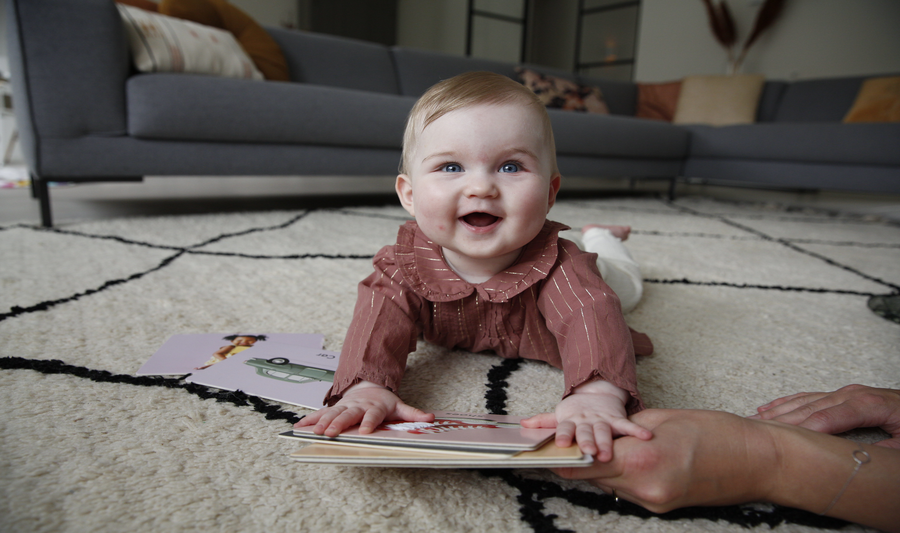
It’s awkward to talk to someone who doesn’t yet talk back, but the research is clear—there’s a direct link between a child’s intelligence and the number of words spoken to them. In the first few months, your baby is constantly listening to the intonation, rhythm, and patterns of your voice. Even though they can’t understand what you’re saying yet, their brain is laying the groundwork for acquiring language.
Some tips for talking to your baby:
Reading
Lie on your side next to your baby, prop yourself up on an elbow, and use your other hand to hold the book. Your baby will take more interest in the book you’re reading if they can see your face, too.
House tours
When your baby is awake, facing forward in a wrap or with their head turned to the side in a carrier, walk around your house and talk about what you are seeing and experiencing. “House tours” will be a favourite activity throughout the first year.
Narrate the day
Narrate as much as possible for your baby as you move about the house or neighbourhood. Tell them about the produce while you are shopping, talk to them while you are changing a diaper. Talk to them face-to-face whenever you can.
Have a “conversation”
If they start to coo or make any kind of vocalisation, talk back to them. Research consistently shows that back-and-forth conversation matters just as much as—if not more than—the number of words they hear.
Sing to your baby
Even if you don’t think you have a great voice, your baby will love it because it’s yours ❤️ Babies tune into singing even more than talking.
Talk in a slower, higher-pitched, sing-song voice
Use the voice that comes naturally to you when speaking to babies. Babies are pre-programmed to tune into higher tones, and learn more from the stretched out vowels in baby talk.
Are you fascinated by the studies that link IQ to how much language a child hears in their early months and years? We are, too! Check out “The Power of Talk: The Impact of Adult Talk, Conversational Turns, and TV During the Critical 0 – 4 Years of Child Development”.

Posted in: 0 - 12 Weeks, Bonding, Communication, House Tours, weekly-series, Child Development
Keep reading

0 - 12 Weeks
3 - 4 Months
How the Look at Me Ladybird supports your baby’s visual tracking and tummy time
The Look at Me Ladybird engages newborns with gentle sound and movement, supporting early visual and auditory tracking. Its high-contrast design captures developing eyesight, while repeated ramp play encourages head lifting during tummy time. As babies grow, it helps strengthen coordination, build neck muscles, and lay the foundation for future learning and movement skills.
0 - 12 Months
0 - 12 Weeks
3 - 4 Months
5 - 6 Months
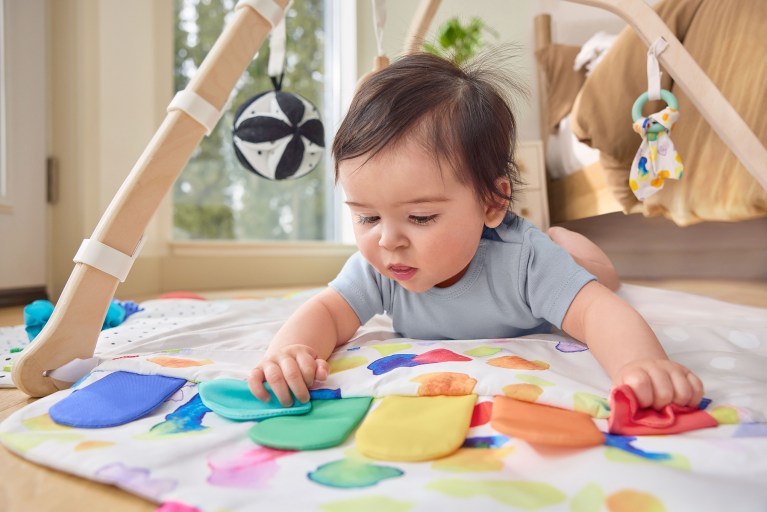
Our award-winning Play Gym just got an update—see what’s new
After numerous play studies, weeks of in-home testing, and thousands of customer surveys, we are excited to announce updates to our award-winning Play Gym, now designed with even more developmental support for your baby.

0 - 12 Weeks
Newborn safety basics for new parents
Safety is always at the forefront of any new parent’s mind. While the first few weeks can feel like a crash course, you’ll soon master the basics.