


How music can help your child develop impulse control
Musical play can help children practice turn-taking and following directions.
Musical play can help children practice turn-taking and following directions.

If your child throws rocks at the playground, what should you do? One option is to clearly say, “Those rocks can hurt someone. Let’s find something else to throw.” This is known as a logical consequence—an outcome caused by a child’s behavior but determined by an adult. At this age, logical consequences are about helping … Continued
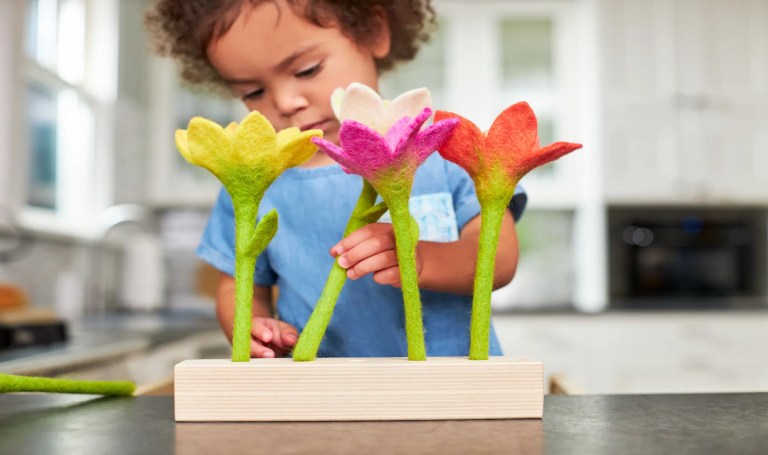
These fun gift ideas for 2-year-olds support their motor skills, independence, and creativity.
Everyone talks about the “terrible twos,” but that outdated phrase isn’t fair to your 2-year-old. They’re not terrible—they’re just in a period of rapid brain growth. Balancing independence and connection is the challenge of this exciting year, when your child likely wants to do everything on their own one minute and be cuddled the next. … Continued

Washing their hands is an important and practical skill for your child. Here's how to break it down into manageable steps.

Mirror play builds self-awareness, empathy, and social-emotional learning. Here are 4 ways to teach your child using their reflection and yours.


Join Lovevery CEO Jessica Rolph as she explains The Helper Play Kit for months 25 to 27 of your toddler's life.

Lovevery CEO Jessica Rolph discusses how empowering children to choose how they show affection can help them establish healthy boundaries later on.

Taking turns comes before sharing, and your child is ready to practice that now with some adult guidance.

As early as 2, your child is starting to understand how books work. Here are some strategies to encourage your budding reader by encouraging "print motivation."

Here are some ways to practice color-matching, using The Lovevery Drop and Match Dot Catcher and household craft supplies.
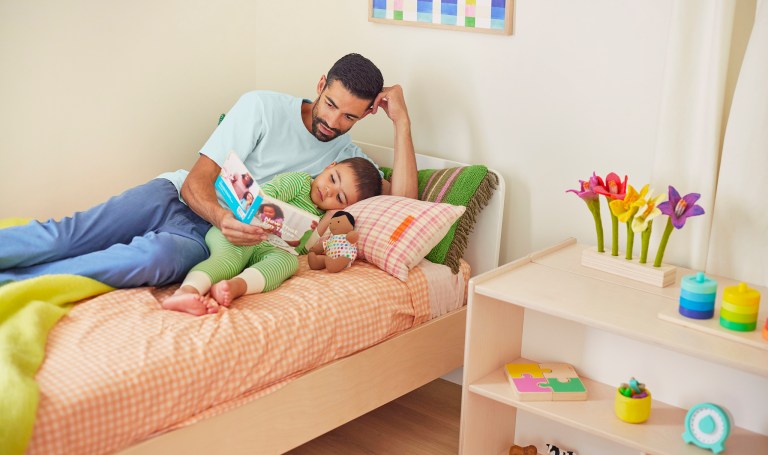
Ultimately the decision is up to you, but here are some ways to notice and support your child's readiness to transition a crib to a bed.

A lot of exciting language development happens between your child's second and third birthdays. Here's what you can expect now in terms of language development.

Supporting your child’s ability to focus and concentrate helps them get deeper into play and lays a foundation for the mental stamina they’ll need later on.

Your two-year-old is likely starting to demonstrate more awareness of environmental sounds. Here's how you can help them tune into sound.

Many sensory activities focus on texture, temperature and other tactile properties. Try these ways to incorporate smell into your two-year-old’s sensory play.

Your entryway is usually busy, so it's a great place to create a prepared environment. Learn how to do this so your child knows where to find what they need.

Children as young as 18 months can start taking on regular household responsibilities. These will be simple and straightforward, like wiping up spills or helping set the table, and will require modeling and patience from you.

Wooden toys are a staple of Montessori learning. They're durable, beautiful, and inspire wonder for a child's budding imagination.