

4 signs toddlers understand language even if they aren’t talking much yet

Much of language development is invisible. Your toddler’s receptive language is much stronger right now than their expressive language; this means they understand more than they can say👂
At this age, your child may understand about two new words a day. They may speak only a handful of partial words, but their ability to comprehend what you’re saying is far more advanced.
When you engage with all of their attempts to communicate, you can help both types of language grow as they learn the power of communication.
Here’s how your toddler shows you what they understand, even if they aren’t talking much yet:
They point to (or look at) something when you ask them to
Between 16 and 19 months, your toddler may start to demonstrate that they understand the words for many common objects in their world by looking at or pointing to them if you ask them to: “Can you point to the front door?”
They retrieve something for you from another room
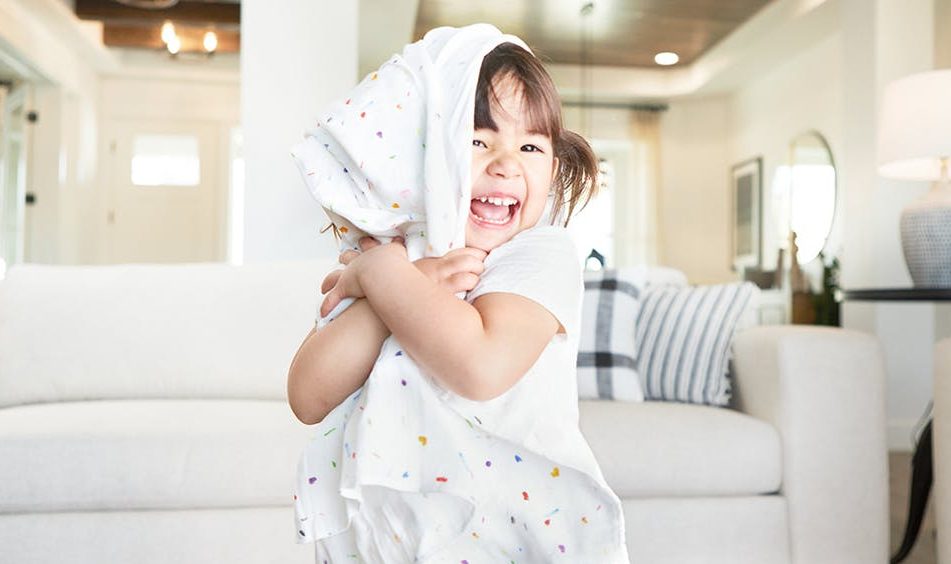
Your toddler might bring something familiar to you when you request it, starting sometime around months 15 to 18.
At first, it will probably be easier for them to bring something to you from the room you’re already in. Ask for familiar objects that are kept in a specific place your toddler can get to with simple instructions. Help out if they need it by pointing towards the object and/or going with them to retrieve it.
Once they can bring you something from the same room, give them a challenge and request a familiar object from another room.
They gesture to indicate their needs
Between 12 and 19 months, your toddler may make a sound to get your attention and use a gesture to help communicate their meaning. They might nod their head for “yes”, reach or point to something they want, or wave a hand “bye-bye”. Waving often happens before pointing.
They recognise and point to animal pictures, and make animal sounds
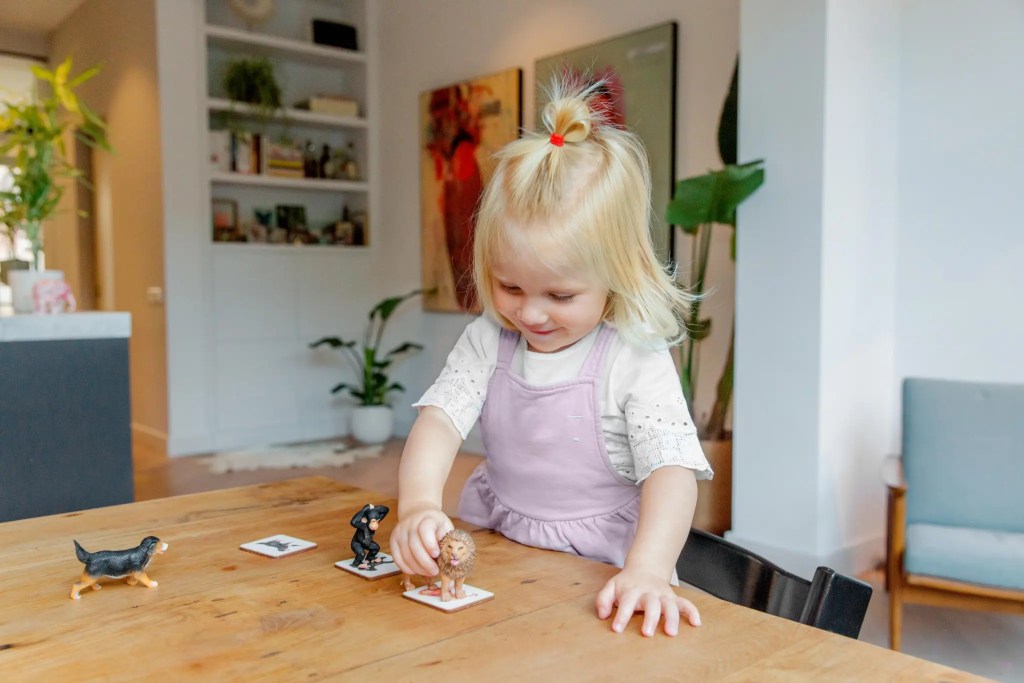
Your toddler will likely be able to recognise and point to four or more animals between 16 and 21 months. Then, around 22 months, they may start to make the sounds for animals they see. For example, your toddler may see a cow and say “moo,” or a sheep and say “baaa”. Many animal sounds encourage the use of the very syllables that your toddler is working on.
Familiar songs and books, paired with gestures that include sounds, are great ways to encourage language acquisition and growth. Children learn from spoken words, singing, symbols, and gestures. You may even notice that very young toddlers will gesture along with songs before they can say the words. A great trick is to sing an entire familiar song only using a single syllable—try singing “Itsy Bitsy Spider” using only the sound “ba”—you may discover that even a very young toddler will suddenly mimic the shape of your mouth or even try an approximation of the sound.


Posted in: 19 - 21 Months, Communication, Language, Milestones, weekly-series, Child Development
Keep reading

19 - 21 Months
22 - 24 Months
25 - 27 Months
28 - 30 Months
31 - 33 Months
34 - 36 Months
What kind of chores are right for my child?
Children as young as 18 months can start taking on regular household responsibilities. These will be simple and straightforward, like wiping up spills or helping set the table, and will require modeling and patience from you.

13 - 15 Months
16 - 18 Months
19 - 21 Months
22 - 24 Months
5 co-regulation tips to help your toddler manage their feelings
When your toddler is upset, it can be hard to know what to do ❤️ During the newborn stage, you helped your baby calm down by holding them, rocking them, and taking deep breaths. Now the process is getting more complicated. Your child’s emotions become more complex as they get older. Sometimes they don’t want … Continued

13 - 15 Months
16 - 18 Months
19 - 21 Months
22 - 24 Months
Wish your toddler would focus? Try playing together first
When you read a book or practise stacking blocks with your toddler, you do more than bond with them. You also help increase their attention span ❤️ Two related studies published in 2019 and 2022 found that when parents and their toddlers focused on a toy together, the toddlers paid attention a little longer and … Continued