

Art, science, and fine motor: water play checks all the boxes

We have yet to meet a toddler who doesn’t love water. It feels good, it’s fascinating to watch, and it changes shape according to the container it’s in. Here are some ways to further explore the intriguing properties of water.
Note: Never leave your toddler alone near water. Toddlers can drown in as little as two inches of water, so constant supervision is critical. Please use as little water as possible for these activities and always stay within arms’ reach of your baby while they play.
Investigating water inside:
Play with sponges
Show your toddler how to squeeze out the water, then have them try. Natural sponges are especially interesting because of their varied textures, shapes, and sizes.
Water painting
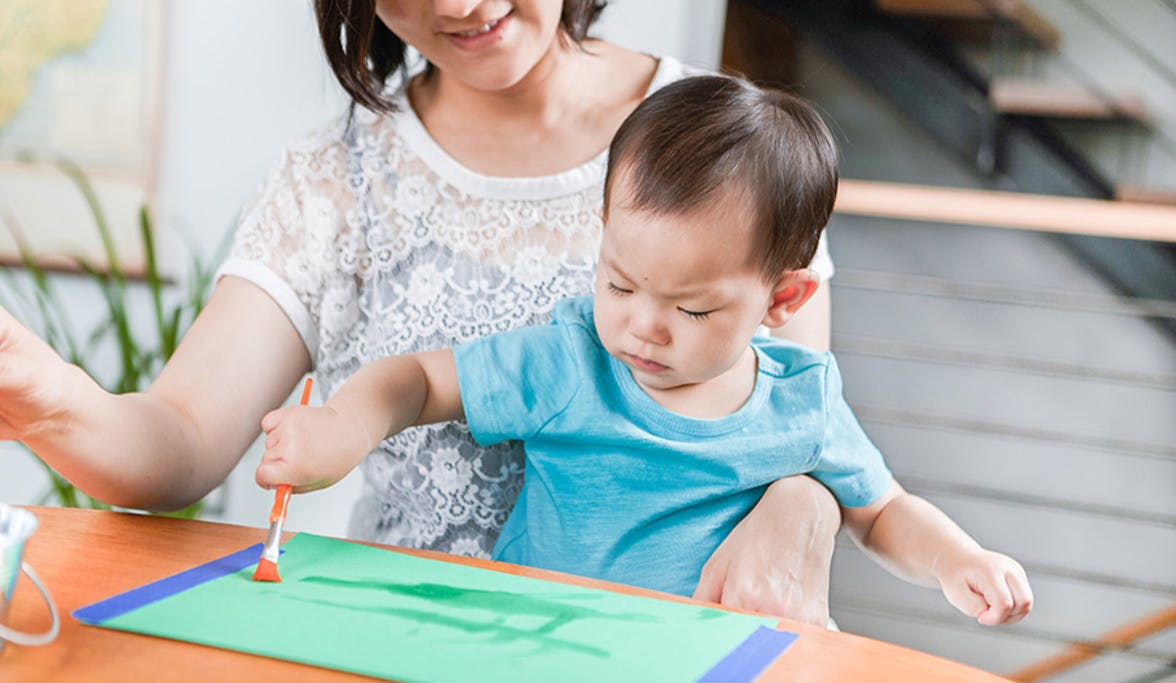
Water painting is simple: all you need are paint brushes, some water, and a dry surface like construction paper or a chalkboard.
Bathtime

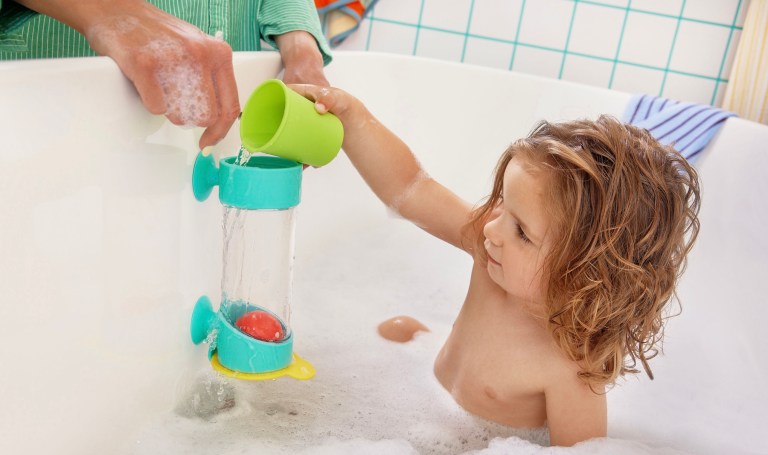
Show your toddler how water drips at different rates in the bath. Funnels, squeeze bottles, basters, Nesting Stacking Dripdrop Cups, and eye droppers all show how water can flow in different ways.
Ice cube play
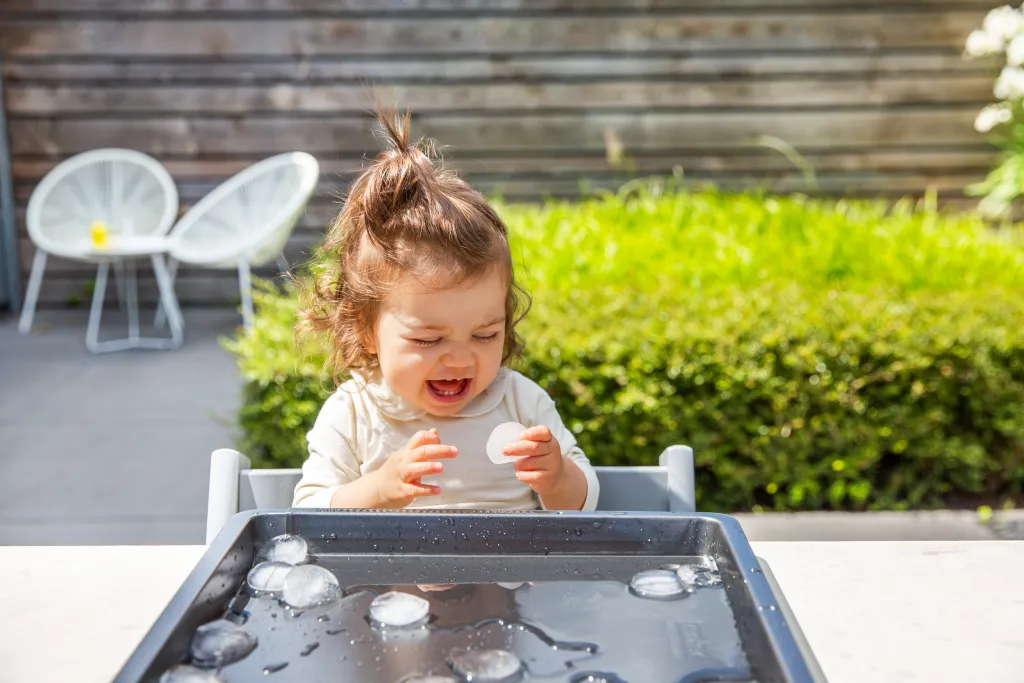
Fill a big bowl of water with some ice cubes to melt. Let your toddler explore the fascinating properties of ice, like texture, temperature, and shape. Use words like cold, melt, and slippery to help them build vocabulary.
Floating and sinking
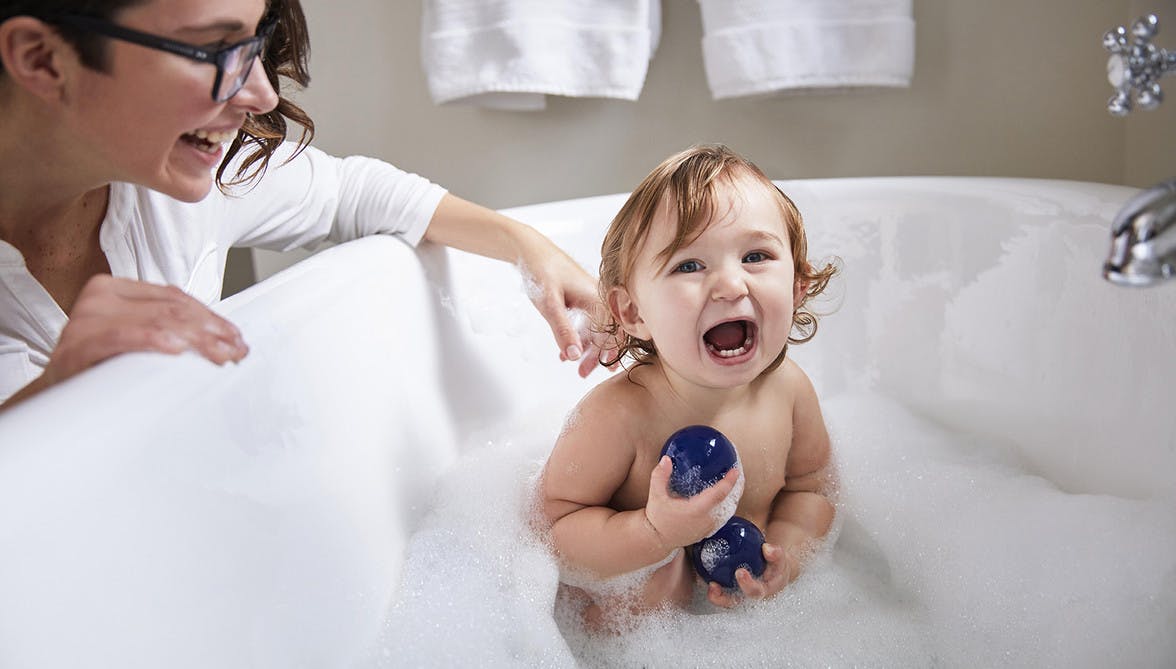
Experiment with objects that float and sink, such as the Opposite Balls, bath toys, and cups (both empty and full).

Investigating water outside:
Paint with water outside
Get a tub of water and some bigger brushes and paint on the pavement or a fence.
Water play with tools
Take a large shallow storage bin outside and fill it with a little bit of water; toss in scoops, droppers, cups, and other toys.
Splash, sink, float
Have your toddler throw sticks and rocks in a lake or pond and talk about how they splash, then sink or float.


Keep reading
11 - 12 Months
13 - 15 Months
16 - 18 Months
9 - 10 Months
The surprising ways bathtime builds your child’s brain
When it’s just you and your child, face to face, bathtime becomes a natural opportunity to connect, play, and develop your baby’s brain. And The Bath Set includes thoughtfully designed tools for building new language, cognitive, and fine motor skills.

13 - 15 Months
16 - 18 Months
19 - 21 Months
22 - 24 Months
5 co-regulation tips to help your toddler manage their feelings
When your toddler is upset, it can be hard to know what to do ❤️ During the newborn stage, you helped your baby calm down by holding them, rocking them, and taking deep breaths. Now the process is getting more complicated. Your child’s emotions become more complex as they get older. Sometimes they don’t want … Continued

13 - 15 Months
16 - 18 Months
19 - 21 Months
22 - 24 Months
Wish your toddler would focus? Try playing together first
When you read a book or practise stacking blocks with your toddler, you do more than bond with them. You also help increase their attention span ❤️ Two related studies published in 2019 and 2022 found that when parents and their toddlers focused on a toy together, the toddlers paid attention a little longer and … Continued