

Helping your baby crawl…and why it’s important to keep them crawling
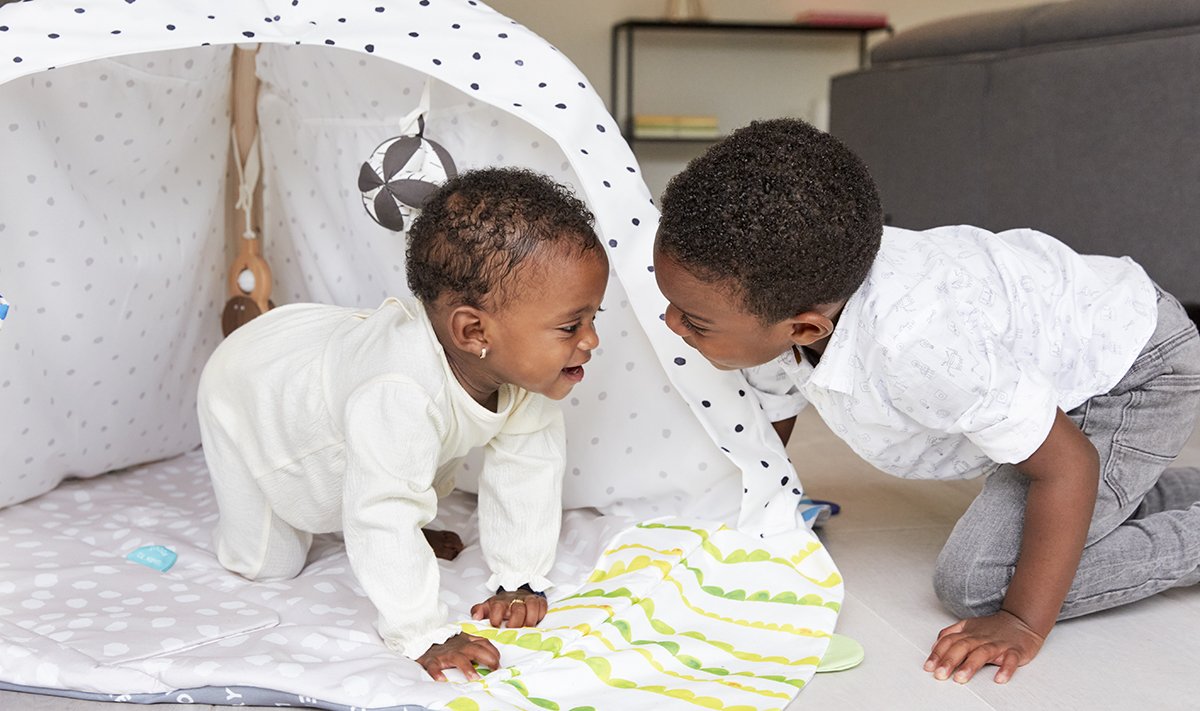
Your baby may prefer that you remain in a bent-over, back-breaking stoop, holding both hands so they can practise walking, but don’t let them give up on belly-scooting or crawling just yet.
Crawling is important for many reasons, including building hand-eye coordination and learning to coordinate movements where the two sides of the body are doing different things.
There are a number of stages your baby will go through while building up to crawling:
Learning to scoot on belly backward (7 to 8 months on average):
Around 8 months, with their belly on the floor, your baby will likely start to scoot backward. Backward scooting usually comes before forward scooting. Ideas for encouraging forward movement can be found below.
Learning to sit and twist, hands-free (8 to 9 months on average):

Before crawling, your baby will work on sitting without hand support, twisting their body and reaching for toys while balancing. This happens around 8-9 months for most babies. You can help your baby work on hands-free sitting by enticing them with the dangling toys on The Play Gym.
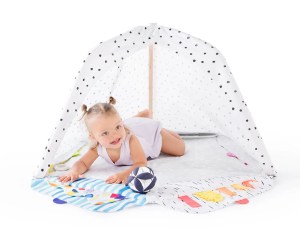
Learning to scoot on belly forward (8 to 9.5 months on average):
While on their belly, your baby will move forward by pulling with their arms and pushing with their legs. You can help them get a better grip by putting them in a short-sleeved onesie with their bare legs on a hard floor. Entice your baby with a toy just out of reach and see if they are able to move toward you. On average, babies start moving forward on their bellies somewhere between 8 and 9.5 months.
Learning to self-support on hands and knees, belly off the floor (8 to 9 months on average):
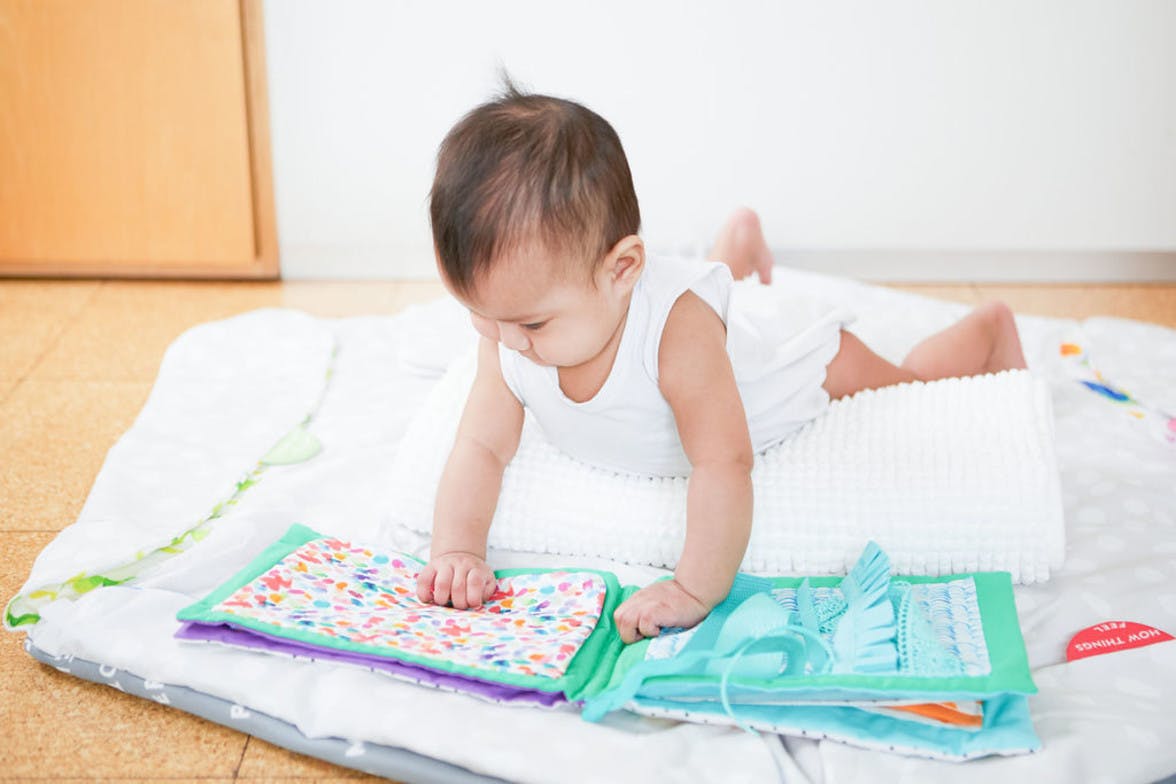
Somewhere between 8 and 9 months, your baby will likely be able to get into the hands and knees position with their belly off the floor. If your baby is scooting, but not yet getting into the crawling position, you can help them learn to put weight on their hands:
Place your baby belly-down on a firm pillow or rolled-up blanket, tall enough to help them get familiar with the position. Make sure the support is high enough so that their arms are straight. Give your baby opportunities to feel lots of different textures with their hands while they are bearing weight on them.
Learning to crawl forward with belly off the floor (9 to 11 months on average):
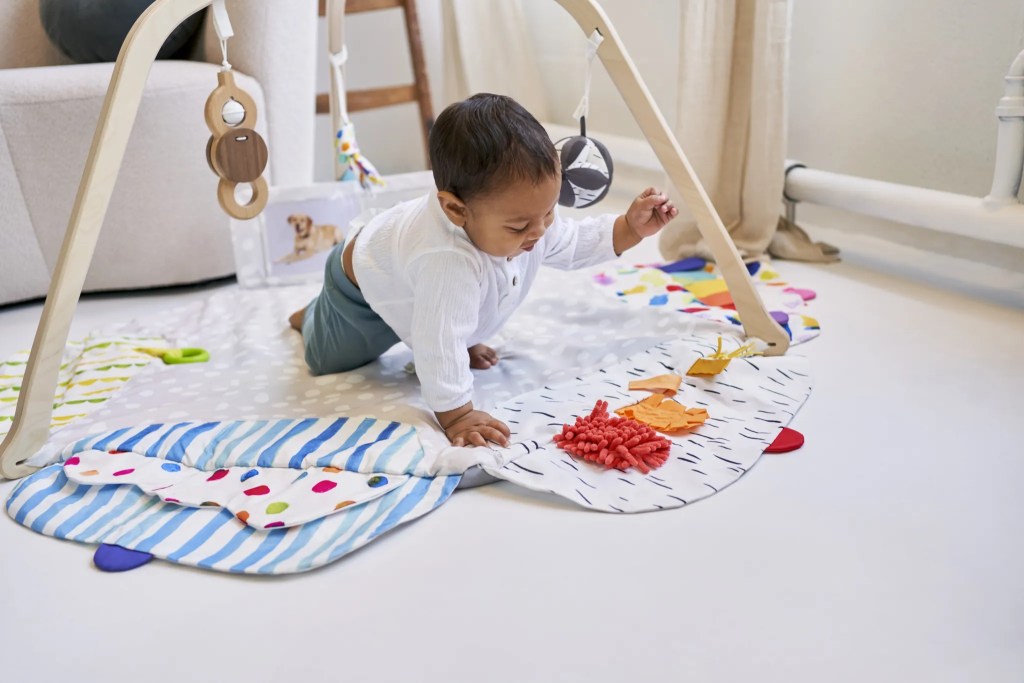
Once your baby is on their hands and knees, you can encourage them to hit a ball or reach for a toy with one hand while putting weight on the other one. Stay close for support if they lose their balance.
One fun way you can keep your baby crawling after they prefer other ways of getting around, is to build a long, tunnel-like fort with pillows and blankets. Even early walkers will stay on hands and knees to explore 😉



Posted in: 9 - 10 Months, Crawling, Gross Motor, Walking, weekly-series, Child Development
Keep reading
11 - 12 Months
13 - 15 Months
16 - 18 Months
9 - 10 Months
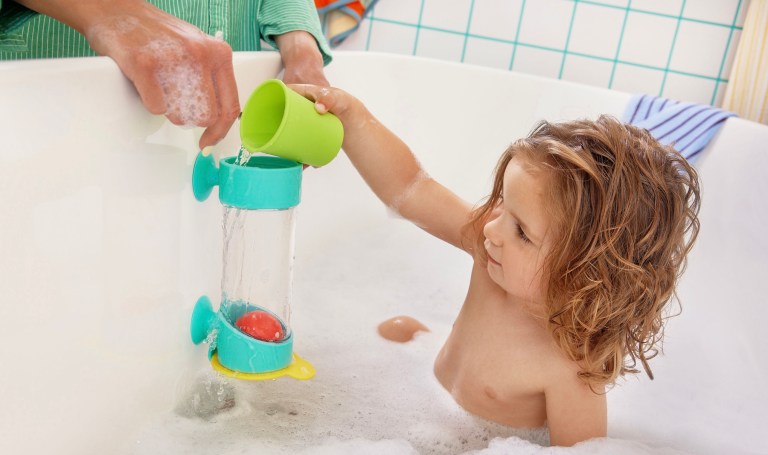
The surprising ways bathtime builds your child’s brain
When it’s just you and your child, face to face, bathtime becomes a natural opportunity to connect, play, and develop your baby’s brain. And The Bath Set includes thoughtfully designed tools for building new language, cognitive, and fine motor skills.

0 - 12 Weeks
11 - 12 Months
13 - 15 Months
16 - 18 Months
19 - 21 Months
22 - 24 Months
25 - 27 Months
28 - 30 Months
3 - 4 Months
31 - 33 Months
34 - 36 Months
5 - 6 Months
7 - 8 Months
9 - 10 Months
Why wooden toys make the best playthings
Wooden toys are a staple of Montessori learning. They're durable, beautiful, and inspire wonder for a child's budding imagination.


9 - 10 Months
Welcome to The Explorer Play Kit for months 9-10
Watch Lovevery CEO Jessica Rolph introduce the Explorer Play Kit for months 9 and 10 of your baby's life.