

Is your toddler ready to take turns and share?
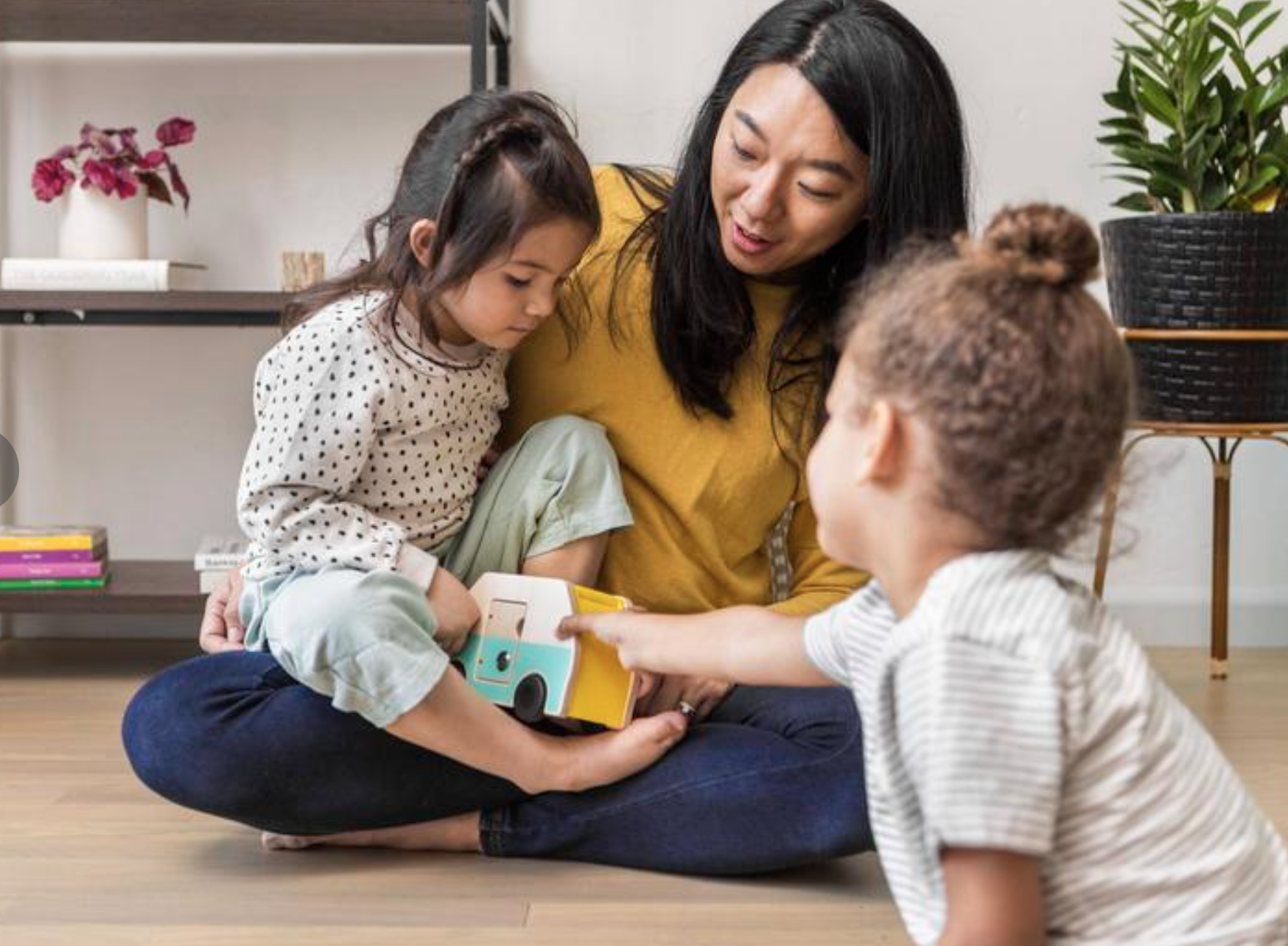
Teaching our children to share is often an early goal for us parents, but adults often ask children to share long before they are ready. For children, the whole idea of sharing feels arbitrary: what are the rules? Why do we take turns with certain objects and not others? Why do we have to do this at all? It’s not hard to see why sharing is a hard sell with small children 🙃
When we talk about sharing with two-year-olds, what we’re really talking about is turn-taking. Knowing the difference between the two—and having a sense of when children are ready for each—can help determine what kind of support they need along the way.
What’s the difference between taking turns and sharing?
Sharing and turn-taking sound like the same thing, but children have to practise turn-taking—with adult help—for a long time before they’re ready to share.
Taking turns involves waiting while someone else uses the exact object you want to use, and it’s hard for anyone, really. Children may be cognitively and developmentally ready to start taking turns at around age two. Even then, they will almost always need to be supported and guided by an adult.
Sharing, on the other hand, is a complex collaborative process involving a common goal, and comes later, beginning around age four.
How to teach toddlers to share and take turns
Put away a small number of special “non-negotiables”
If you are expecting company, have your child select a few beloved toys and make them off-limits (tip: determine the number of items before you start). This respects the connection your child has with these items and lets them be in control.
Preview what’s going to happen
Previewing what will soon be happening removes the element of surprise: “You’re playing with the truck now, and in three minutes it’s going to be Maria’s turn, and she will get to play with it for a while”.
Use a visual timer
Using a visual timer helps your child know when their turn is up.
Practise turn-taking in everyday life

Think about introducing the concept of turn-taking as you go about your day – make a smoothie together and take turns dropping ingredients like banana slices in one by one.
Take a breather
If turn-taking starts feeling too hard, consider an activity that provides more opportunity for harmony. Sensory play, art activities, puzzles, or even a common task like spreading nut butter on crackers are all easy ways to let everyone have a turn at the same time.
Practice together
Here are some fun games that promote turn-taking. You can also put a puzzle together with your child, taking turns by adding pieces one at a time.


Posted in: 28 - 30 Months, Free Play, Social Emotional, weekly-series, Child Development
Keep reading
2-year-old
28 - 30 Months
31 - 33 Months
Our top tips for getting your 2-year-old involved in the kitchen
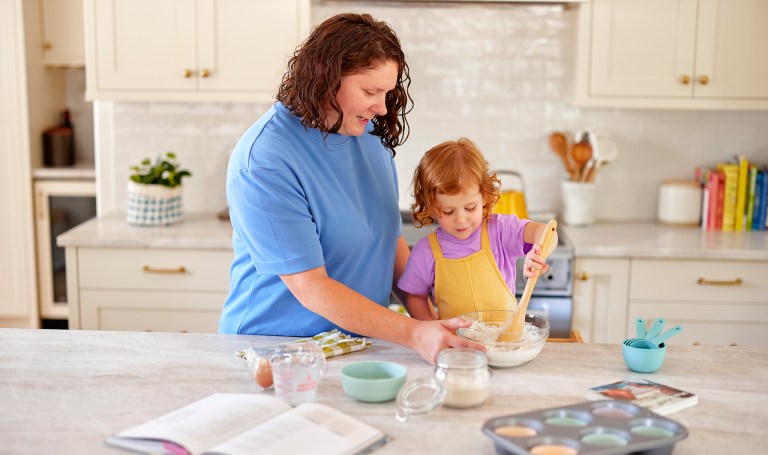
You may not have the patience for toddler help in the kitchen every day—and that’s okay ❤️ Even occasional cooking projects can get them excited to eat new foods, teach them to follow directions, and encourage them to be helpful.

2-year-old
25 - 27 Months
28 - 30 Months
How music can help your child develop impulse control
Musical play can help children practice turn-taking and following directions.

25 - 27 Months
28 - 30 Months
31 - 33 Months
34 - 36 Months
Is your 2-year-old ready for logical consequences?
If your child throws rocks at the playground, what should you do? One option is to clearly say, “Those rocks can hurt someone. Let’s find something else to throw.” This is known as a logical consequence—an outcome caused by a child’s behavior but determined by an adult. At this age, logical consequences are about helping … Continued