

It’s okay to cry—letting your child know they can feel sad
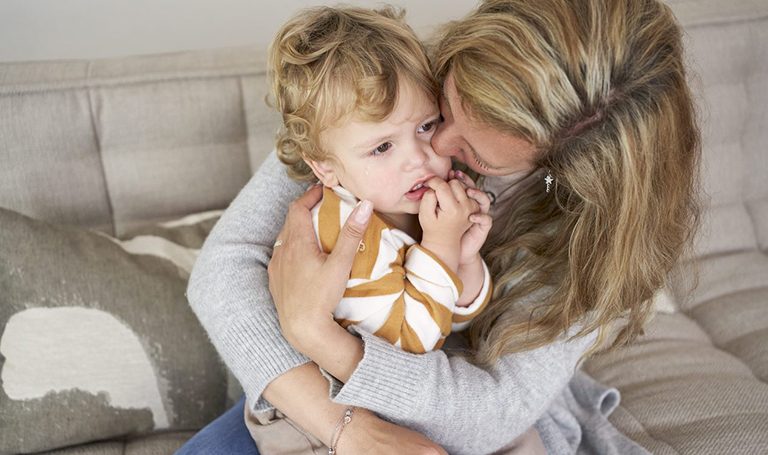
We’ve all been there: your toddler’s sobbing because their strawberries are being served in a bowl rather than on a plate, or you’re playing in the park and they start crying over a microscopic scratch. It’s natural to respond by saying, “Don’t cry, you’re okay.”
It’s a fact of life: babies and toddlers cry. The reasons they cry change as they get older, and so do our reactions. We tend to be more forgiving of infants (although a colicky baby can put anyone’s patience to the test), as we know that crying is one of their only ways to communicate.
Once kids start to walk, talk, listen, and follow simple directions, adults can become less accepting of crying. Parents naturally want to prepare their children for the world beyond home, and sometimes we react as though expressing negative emotions is a sign of weakness.
Crying can be a way of processing any strong emotion. Toddlers, of course, cry when they’re sad, but they might also cry when they encounter something new, confusing, unexpected, or difficult.
Here are some ways to help your toddler work through big feelings without telling them to stop crying:
Validate & empathise
A simple step is to just say, “I can tell you’re upset,” or “That looks really frustrating for you and I can see why.” It may help and it shows you care. At this age, your toddler is crying for a reason, even if it doesn’t make much sense to you.
Notice
Notice how you are feeling when your toddler starts crying. We may tell our toddlers to stop because we’re frustrated or out of time and patience. Watching our reactions can be an instructive way to tap into our own empathy.
Listen

Finding the patience to listen to your toddler struggle to communicate with you in a difficult moment can be hard, but even with a limited vocabulary, they want to tell you about their feelings. Some of it may come in the form of words, some from body language and other cues.
Circle back
Your toddler is starting to remember more and more. A day after a tough episode, revisit it when your toddler’s in a calmer state: “Remember when you were so sad yesterday?”

Posted in: 16 - 18 Months, Communication, Social Emotional, weekly-series, Child Development
Keep reading
11 - 12 Months
13 - 15 Months
16 - 18 Months
9 - 10 Months
The surprising ways bathtime builds your child’s brain
When it’s just you and your child, face to face, bathtime becomes a natural opportunity to connect, play, and develop your baby’s brain. And The Bath Set includes thoughtfully designed tools for building new language, cognitive, and fine motor skills.

16 - 18 Months
Introducing 3 new playthings to The Adventurer Play Kit for months 16, 17, 18+
The Adventurer Play Kit has three new playthings to keep your toddler engaged and challenged through play.

13 - 15 Months
16 - 18 Months
19 - 21 Months
22 - 24 Months
5 co-regulation tips to help your toddler manage their feelings
When your toddler is upset, it can be hard to know what to do ❤️ During the newborn stage, you helped your baby calm down by holding them, rocking them, and taking deep breaths. Now the process is getting more complicated. Your child’s emotions become more complex as they get older. Sometimes they don’t want … Continued