

Reach, grasp, mouth, repeat
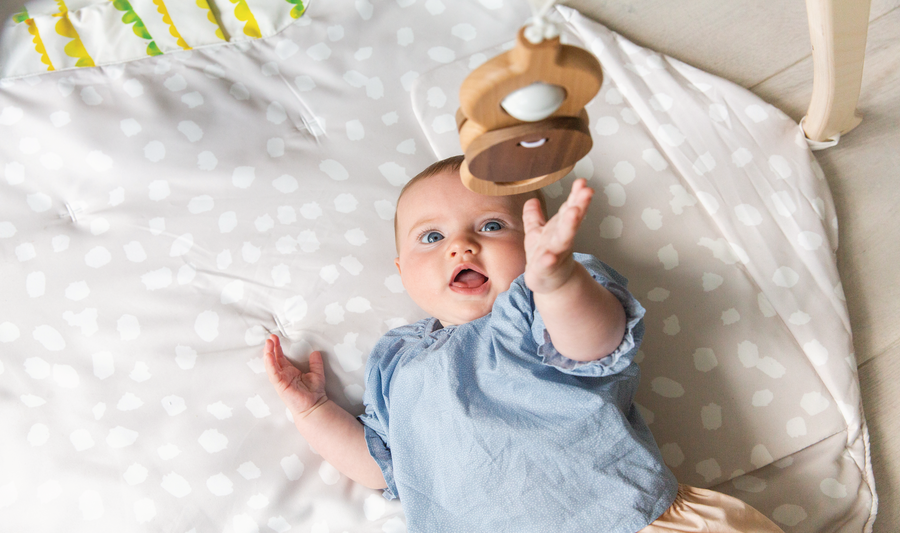
Before your baby’s hands open, the world happens mostly to them or for them. In the coming months, as their hands open and they begin to use them, your baby will start to see the impact they can have on their own little world. They will first open their hands and begin to bat at objects. Eventually, they will reach, grasp, and mouth objects that interest them. Exciting stuff 🙂 All of that reaching, grasping, and mouthing practice also builds hand-eye coordination.
Here’s what to expect from your baby as they learn to reach, grasp, bat and mouth:
Hands start to open
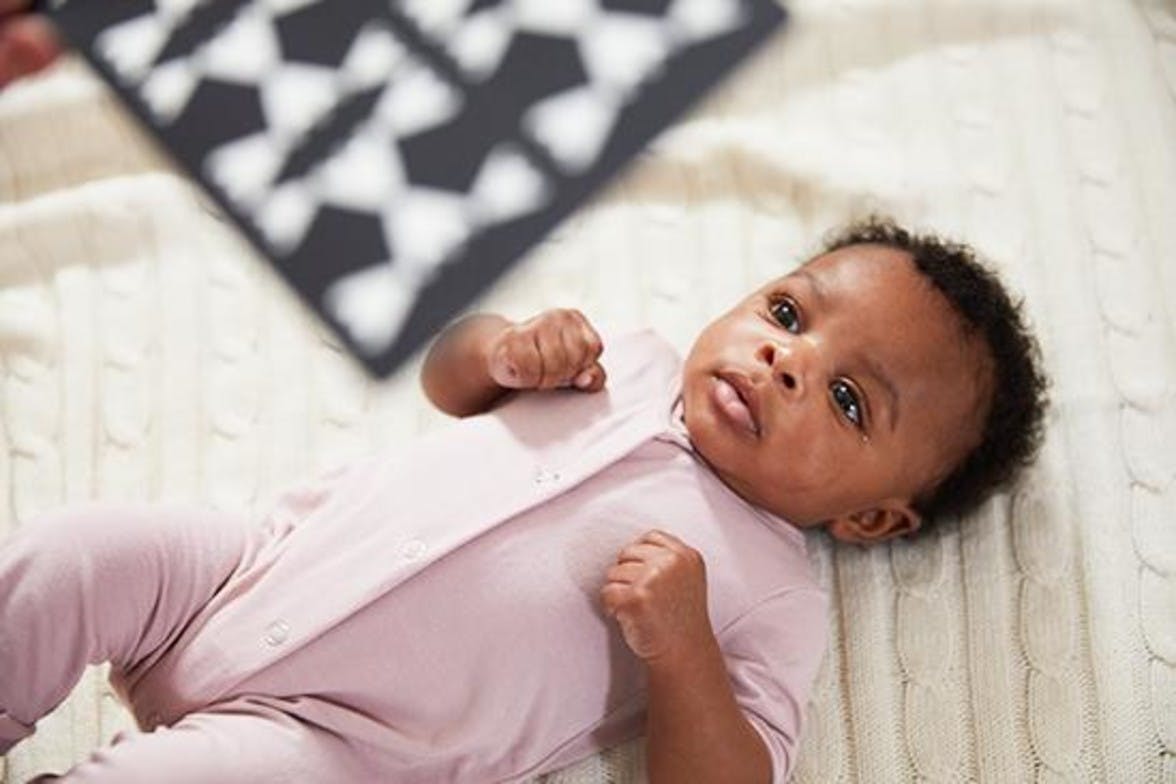
Somewhere between 2 ½ and 3 ½ months, your baby’s hands will start to open up. If their hands are mostly in a fist, here are some ideas to help your baby open their hands:
- Stroke the back of their hands and see if they open their fist.
- Gently uncurl their fingers and thumb.
- Rub or pat their hands together, or pat their hand on your hand.
- Let them touch and pat your face.
Reflexive grasping

Before about 4 months, your baby’s fingers will reflexively wrap around an object when it is placed in their hand. The more often you engage your baby’s grasping reflex, the sooner they’ll be able to open and close their hands voluntarily. Here’s how you can help:
- Stroke the back of your baby’s hands to help open them.
- Place a ring inside their hands; they’ll reflexively wrap their fingers around it.
- Help them keep grasping the ring by gently putting your hands over their fist.
Reaching towards objects, not yet grasping

Sometime between 2 ½ and 4 ½ months, your baby will start reaching towards an object without yet being able to grasp it. You can help by giving your baby lots of practice batting at the safe dangling objects in The Play Gym:
- Place your baby on their back with their chest in line with the dangling Wooden Batting Ring.
- Babies around 1 to 3 months will start to wave their arms around when they see a toy.
- See if their hands and arms accidentally make contact with the ring—move their arms if necessary to show what happens.
- The Batting Ring is especially helpful, since it’s the right height for accidental contact and makes a happy noise at the slightest touch.
Grasping and mouthing
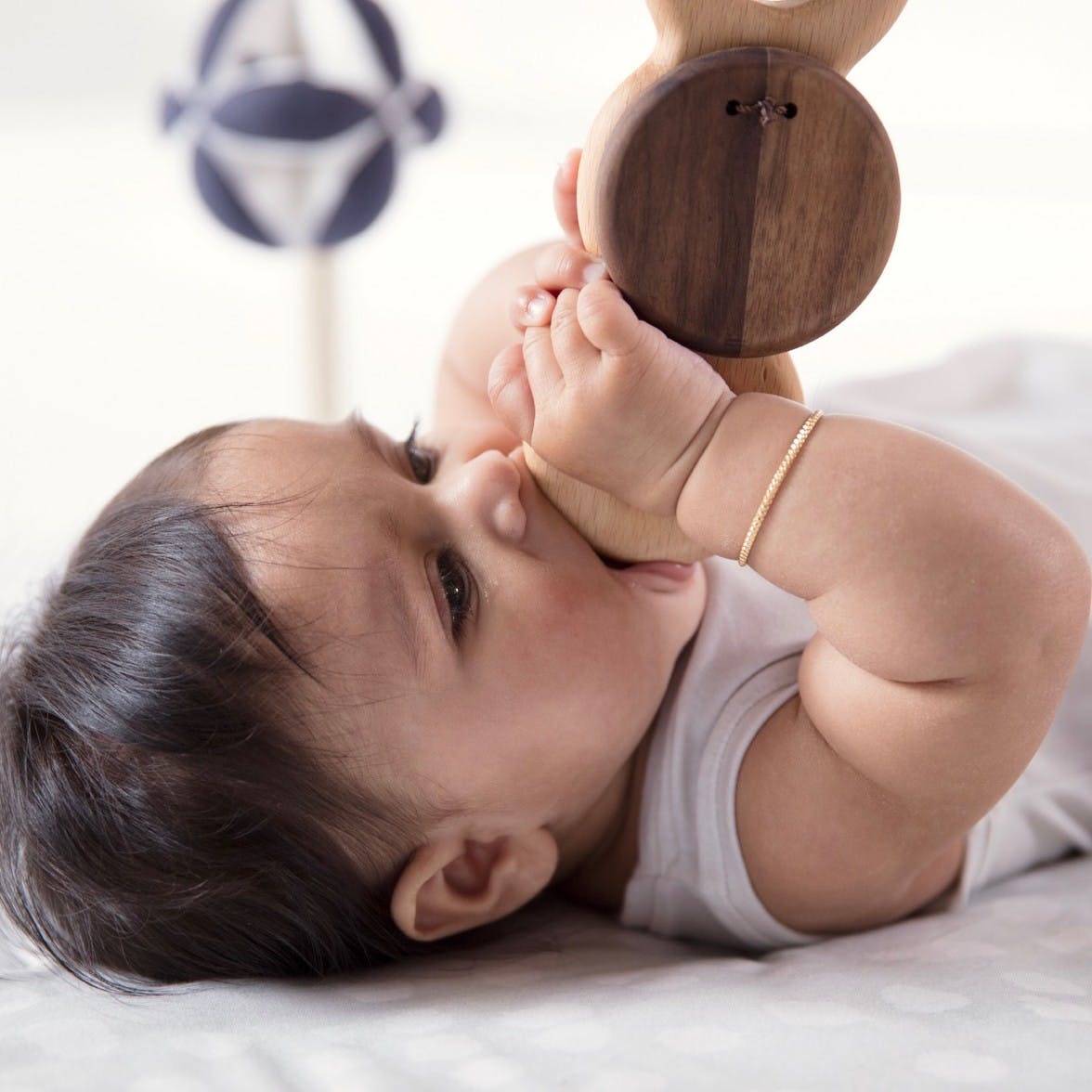
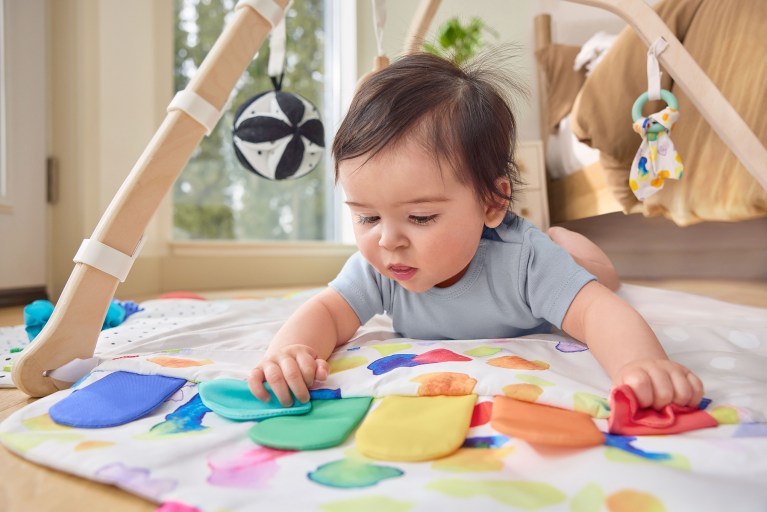
Sometime around 4 to 5 months, your baby may start to reach for an object with both hands and grasp it for a moment or two. As soon as your baby is able to hold things, they’ll want to put them into their mouth.
Over the next year, they will practise with smaller and smaller objects to refine their grasp.

The Looker Play Kit
The Looker Play Kit welcomes your newborn with tools to help them process the world around them and build brand new brain connections with high-contrast and black-and-white Playthings.
The Play Gym
Lovevery’s award-winning, Montessori-inspired baby activity gym gives baby a whole year of play for their developing brain. See inside The Play Gym by Lovevery.

Posted in: 3 - 4 Months, Fine Motor, Gross Motor, Mouthing, Playtime & Activities, weekly-series, Child Development
Keep reading
0 - 12 Months
0 - 12 Weeks
3 - 4 Months
5 - 6 Months
Our award-winning Play Gym just got an update—see what’s new
After numerous play studies, weeks of in-home testing, and thousands of customer surveys, we are excited to announce updates to our award-winning Play Gym, now designed with even more developmental support for your baby.

0 - 12 Weeks
3 - 4 Months
5 - 6 Months
5 key elements to create a Montessori nursery
A Montessori-inspired nursery is simple and soothing. We've collected 7 of our favorite items here to help you design one that's right for your baby.

0 - 12 Weeks
11 - 12 Months
13 - 15 Months
16 - 18 Months
19 - 21 Months
22 - 24 Months
25 - 27 Months
28 - 30 Months
3 - 4 Months
31 - 33 Months
34 - 36 Months
5 - 6 Months
7 - 8 Months
9 - 10 Months
Why wooden toys make the best playthings
Wooden toys are a staple of Montessori learning. They're durable, beautiful, and inspire wonder for a child's budding imagination.