

How to Montessori your child’s play space, by Montessori Madre

Maria Montessori believed in developing the whole child—physically, socially, emotionally, and cognitively. But you don’t have to transform your whole home to help your child benefit from the Montessori philosophy. Some simple adjustments, which you may incorporate into nearly any space at any time, can immediately deepen your child’s play.
Start with gradual changes and use what you already have. Over time, your child’s play space can become a beautiful reflection of your values and a welcoming place for your child to learn and play.
A Montessori play space promotes the following key elements:
Independence

The Montessori method encourages independence from a young age to help children become more capable and make their own discoveries. Easily accessible materials, toys, and books encourage your child to gravitate toward their interests, giving them autonomy over their learning experience. Rotate the selection periodically, keeping favorites available as you introduce fresh playthings.
A few great additions to encourage independence could include:
- a low open toy shelf
- a bookshelf that displays the covers of books instead of their spines
- a child-sized table and chair
Freedom of Movement

Give your child plenty of uncluttered floor space and opportunities to climb, jump, push, pull, step up and down, and throw. Physical challenges like these can help your child develop key skills during their sensitive period for movement.
Bonus tip: Children love to see themselves as they move—adding a large, securely mounted mirror to your space can motivate and inspire them.
Order

Children learn best in a clutter-free environment with a limited number of toys available at one time. Order helps your child home in on things that interest them and promotes focused attention. An easy way to encourage order is to categorize materials into trays, baskets, or shallow containers. Periodically rotate the selection, keeping favorites available as you introduce fresh playthings.
Beauty
Just like adults, children gravitate toward what is beautiful. For this reason, you may see many objects in a Montessori space that use materials like wood, cotton, and wool. A neutral color palette and natural lighting can help make the environment feel natural and beautiful. You can hang artwork at your child’s eye level. Including a potted plant, which your 2-year-old can also learn to water and take care of over time, is a simple way to add beauty—just be sure to keep it out of reach.
Personality
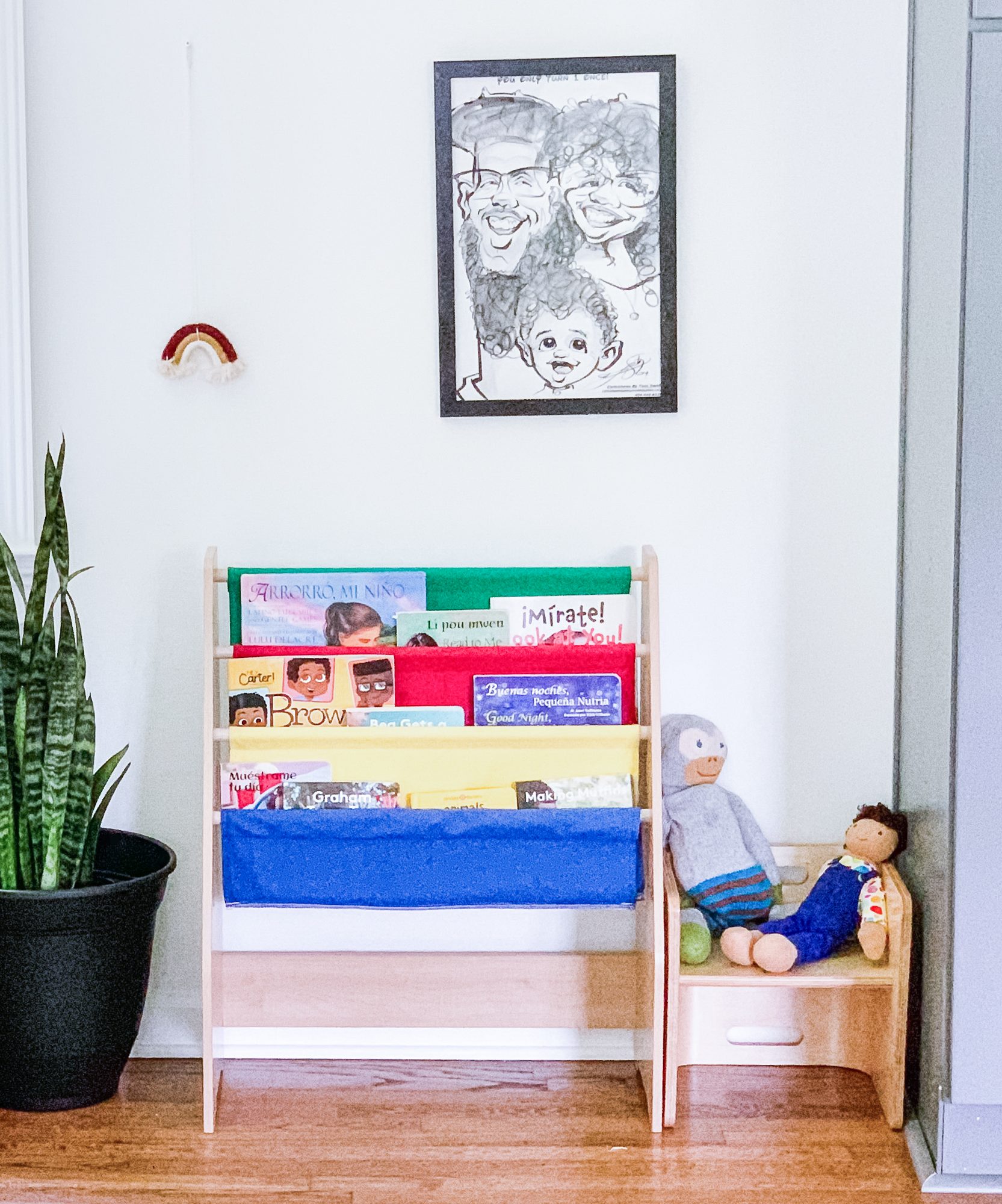
Montessori emphasizes meaningful objects and artwork that tell a story or bring you joy. You can, for example, frame textiles and prints connected to your culture, choose art highlighting your travels, display your 2-year-old’s favorite family photo, or hang a piece of artwork they recently created. These detailed elements personalize the space while emphasizing what your family values most, giving it an extra special touch of beauty and meaning ❤️


Posted in: 31 - 33 Months, Home, Montessori, Playthings, Toy Rotation, weekly-series, Parent & Family Life
Keep reading

2-year-old
31 - 33 Months
Screen time can be confusing for your toddler. Here’s why and what to do.
Screen time is a reality for many families at this age. While there’s no harm in putting your 2-year-old in front of the TV for an episode of an age-appropriate show, research shows they still can’t understand much of what they see.

2-year-old
31 - 33 Months
Why construction play matters—and how to do it
Did you know that young children who engage in a lot of construction play—using materials to build or create—tend to have stronger math skills later on?

2-year-old
31 - 33 Months
5 tips for raising a resilient child
Protecting your child from disappointment is a natural instinct—especially when you’re trying to avoid a meltdown 😉 But there’s value in giving them space to work through challenges on their own.