

Our top tips for getting your 2-year-old involved in the kitchen

You may not have the patience for toddler help in the kitchen every day—and that’s okay ❤️ Even occasional cooking projects can get them excited to eat new foods, teach them to follow directions, and encourage them to be helpful. At this age, tasks that feel like chores to you can feel fun and important to your 2-year-old.
How to get the most out of cooking with your toddler
Make sure their efforts are meaningful. Your toddler will feel more involved if they can do work that matters—like washing the carrots before you peel them or adding blueberries to the muffin batter. When you’re eating dinner later, point out: “These carrots are so clean and tasty. Thank you for washing them!” Knowing their efforts are appreciated and valued can encourage them to be a helper in other ways.
Adapt to their skill level. Many tasks can be made easier with a few adjustments. Try using a kitchen helper tower so your child can reach the kitchen counter. Prepare tasks for them in advance—for example, pre-measure ingredients that they can pour or put the dishwasher silverware rack next to the utensil drawer so they can sort spoons and forks.
Prevent mishaps, but also accept when they happen. Pull out all the ingredients and tools you need before getting started so you don’t have to stop and get them in the middle of cooking. Keep ingredients out of your child’s reach until it’s time to use them. Remember that any messes are opportunities to learn about cleaning up. When they happen, hand your child a wash rag or a towel so they can be part of the process.
8 tasks your toddler can do in the kitchen
- Tearing lettuce or moving pre-chopped veggies into a bowl
- Stirring ingredients in a bowl—wrap the bottom of the bowl with a kitchen towel so it doesn’t move as they stir
- Chopping bananas, strawberries, or soft vegetables with a crinkle cutter or another toddler-safe chopping tool
- Placing smoothie ingredients in a blender or sprinkling toppings on a pizza
- Emptying the dishwasher—your toddler can put away their dishes and the silverware, or hand items to you to put away
- Rinsing off dishes and tools—fill one side of the sink with soapy water so your child can pre-wash non-breakable dishes and child-safe tools with a soft sponge
- Wiping surfaces—offer the spray bottle from the Squeaky Clean Squeegee Set and a dishrag so your child can spray and wipe the counters, tables, or floor
- Sweeping up—a child-sized broom and dustpan are perfect for small messes
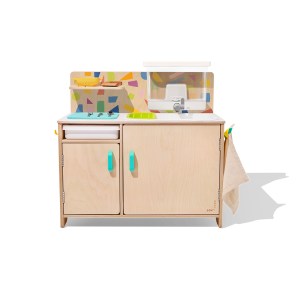

Learn more about the research
Hammond, S. I., & Carpendale, J. I. (2015). Helping children help: The relation between maternal scaffolding and children’s early help. Social Development, 24(2), 367-383.
Waugh, W., Brownell, C., & Pollock, B. (2015). Early socialization of prosocial behavior: Patterns in parents’ encouragement of toddlers’ helping in an everyday household task. Infant Behavior and Development, 39, 1-10.

Posted in: 2-year-old, 28 - 30 Months, 31 - 33 Months, chores, mealtime, Routines, Parent & Family Life
Keep reading

2-year-old
3-year-old
What to do when your child hits someone else
According to a Lovevery poll, 83 percent of parents say their child has hit, kicked, or bit them, and about 60 percent said their toddler had hit, kicked, or bit someone else. It’s important to know that hitting isn’t a reflection of a child’s character at this early stage. Many young children do it because … Continued

2-year-old
3-year-old
4-year-old
What to do when your child bites someone else
Listen to the “What Do We Use Our Teeth For?” song It can feel upsetting—and maybe even embarrassing—when your child bites another person, whether it’s a playmate, a sibling, a caregiver, or you. But they really aren’t trying to hurt anyone. When a young child resorts to biting, they’re usually just overwhelmed by emotions and … Continued

2-year-old
3-year-old
34 - 36 Months
Do this quick prep for a peaceful playdate
Playdates are a great time to develop social skills like building friendships and taking turns. Here's how to support your child before and during a playdate.