

Screen time can be confusing for your toddler. Here’s why and what to do.
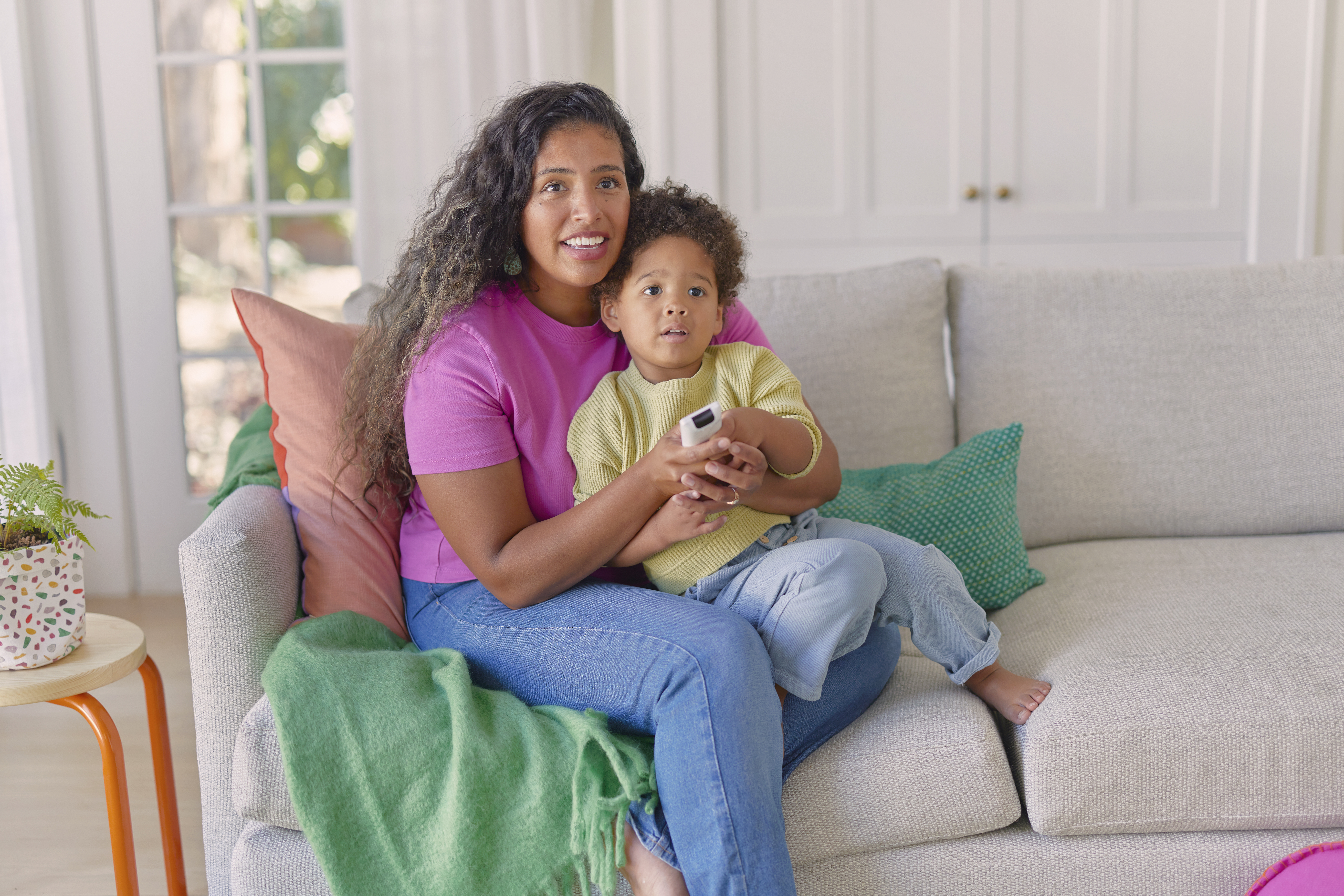
Screen time is a reality for many families at this age. While there’s no harm in putting your 2-year-old in front of the TV for an episode of an age–appropriate show, research shows they still can’t understand much of what they see. To get something out of it—like new words or social-emotional messages—they need your help. Here are our experts’ top tips:
Help them understand the storyline
Summarise the storey. To help them process the concepts in a show, you can summarise plot points. For example, “Daniel Tiger really wanted to play with blocks, but now he can’t. He looks frustrated.”
Explain symbolism in animation. Your toddler is also starting to learn that the images on screen represent things in real life. Help them make connections: “Bluey has a cup of water and you have a cup of water. Cup and cup!”
Relate what they see to off-screen experiences
Connect the show to your child’s day. For example, “I saw that Daniel was eating breakfast. What did you have for breakfast today?” You can save these questions for after the show or during a pause so that your toddler isn’t distracted.
Talk about how characters are feeling. For example: “Big Bird was sad when he couldn’t find his ball. Can you make a sad face? What’s something that made you feel sad?” This can build your toddler’s emotional knowledge, while also helping them better understand the storey.
Predict what will happen next
Discuss the sequence of events. Emphasise temporal words to help your child develop the concepts of time and sequencing: “First, Daniel went to school. Next, he played with Prince Wednesday. Last, Dad Tiger took him home.”
Predict what will happen next. Pause the show and ask, “What do you think will happen when Bluey goes outside?” Making predictions is an essential part of scientific and critical thinking.
Act out what happened on the screen
Mimic what the characters do. Imitating a character’s movements can help your child understand action words. For example, you can dance with Daniel or jump with Bluey as you say, “Spin, spin, spin!” or “We’re jumping!”
Get moving after viewing. Get moving once show time is over to help your child regulate their body after all of that sitting and watching. Try extending the learning from the show—“Dora found a purple flower on her hike—let’s see if we can find one on our walk to the playground!”

Learn more about the research
Dore, R. A., & Zimmermann, L. (2020). Coviewing, scaffolding, and children’s media comprehension. The International Encyclopedia of Media Psychology, 1-8.
Madigan, S., McArthur, B. A., Anhorn, C., Eirich, R., & Christakis, D. A. (2020). Associations between screen use and child language skills: a systematic review and meta-analysis. JAMA Pediatrics, 174(7), 665-675.

Keep reading

2-year-old
3-year-old
What to do when your child hits someone else
According to a Lovevery poll, 83 percent of parents say their child has hit, kicked, or bit them, and about 60 percent said their toddler had hit, kicked, or bit someone else. It’s important to know that hitting isn’t a reflection of a child’s character at this early stage. Many young children do it because … Continued

2-year-old
3-year-old
4-year-old
What to do when your child bites someone else
Listen to the “What Do We Use Our Teeth For?” song It can feel upsetting—and maybe even embarrassing—when your child bites another person, whether it’s a playmate, a sibling, a caregiver, or you. But they really aren’t trying to hurt anyone. When a young child resorts to biting, they’re usually just overwhelmed by emotions and … Continued

2-year-old
3-year-old
34 - 36 Months
Do this quick prep for a peaceful playdate
Playdates are a great time to develop social skills like building friendships and taking turns. Here's how to support your child before and during a playdate.