

5 tips for raising a resilient child

Protecting your child from disappointment is a natural instinct—especially when you’re trying to avoid a meltdown 😉 But there’s value in giving them space to work through challenges on their own. When your 2-year-old tries to build a tower again after it falls down multiple times, they’re developing an understanding that learning is a process and often involves failure.
Here’s how to help your child persevere when things get hard
1. Let them borrow your confidence
When your child is in a new situation or out of their comfort zone, show your confidence in them. For example, if your 2-year-old is nervous about their new babysitter, your reassurance can really help them feel safe and capable: “Michael is a wonderful babysitter. I know you’ll feel better soon and have fun with Michael. I can’t wait to give you a hug when I get back.”
2. Pause before stepping in to help
You’ve heard it before but it’s worth repeating: Let your child struggle. If they have a hard time taking the lid off of a yogurt container, your instinct may be to do it for them. Instead, encourage them to take a new approach. You might ask, “What else could you try?” Or if it’s a really tricky lid, say, “I’ll get it started for you.” Then, peel it off a bit so they can do the rest. These little successes give your child confidence in their ability to persist and succeed.
3. Say “soon” and “yet” when they get stuck
When your child can’t quite do something, remind them that they can do it—just not yet: “You’ve been trying so hard to ride your scooter. With a bit more practice, you’ll be riding soon.” This reassures them that the effort is still worth it even if they aren’t successful right away.
4. Bring attention to their successes
At the end of the day, remind your child of a time they persisted or worked through a challenge: “I remember when you were so frustrated at dinner—your peas would not get on your fork! You kept trying and found a solution.” Recognizing their effort can help them feel capable and emphasize the value of persistence.
You could also let your child overhear a “conversation” you have with their favorite stuffed animal: “Marcus did something so tricky today. He put all of his dinner dishes on the counter himself and even remembered to wash his hands after! I was so proud of him.”
5. Point out “feelings then” and “feelings now”
A big part of resilience is being able to move on from tough feelings. Mention how they were feeling earlier and how that moment passed: “You were really frustrated when you couldn’t get your rain boots on. That was a tough feeling. We got them on together and you splashed in the puddles. Did that help you feel better?”
Keep in mind that your child’s perspective-taking skills are still developing—and taking their own perspective from earlier in the day can sometimes be difficult. They may deny having been upset or sad. If that happens, you may want to wait a couple weeks before trying this strategy again with your child.
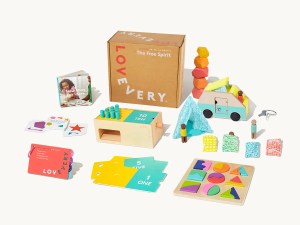
The Free Spirit Play Kit
The Free Spirit Play Kit celebrates this stage with playthings that empower independence, encourage curiosity, and strengthen executive functioning. See what’s inside The Free Spirit Play Kit!

The Play Kits
The Play Kits by Lovevery are thoroughly tested, baby safe, eco-friendly and Montessori inspired. Give your child the best start with our stage-based play toy subscription boxes.
Learn more about the research
Masten, A. S., & Barnes, A. J. (2018). Resilience in children: Developmental perspectives. Children, 5(7), 98.
Zolkoski, S. M., & Bullock, L. M. (2012). Resilience in children and youth: A review. Children and Youth Services Review, 34(12), 2295-2303.

Keep reading

2-year-old
3-year-old
What to do when your child hits someone else
According to a Lovevery poll, 83 percent of parents say their child has hit, kicked, or bit them, and about 60 percent said their toddler had hit, kicked, or bit someone else. It’s important to know that hitting isn’t a reflection of a child’s character at this early stage. Many young children do it because … Continued

2-year-old
3-year-old
4-year-old
What to do when your child bites someone else
Listen to the “What Do We Use Our Teeth For?” song It can feel upsetting—and maybe even embarrassing—when your child bites another person, whether it’s a playmate, a sibling, a caregiver, or you. But they really aren’t trying to hurt anyone. When a young child resorts to biting, they’re usually just overwhelmed by emotions and … Continued

2-year-old
3-year-old
34 - 36 Months
Do this quick prep for a peaceful playdate
Playdates are a great time to develop social skills like building friendships and taking turns. Here's how to support your child before and during a playdate.