

Do this quick prep for a peaceful playdate
Your 2-year-old may play happily alongside another child for short stretches of time, but they will likely need practise and support to learn how to play collaboratively.
For children who aren’t in daycare or preschool, playdates provide an opportunity to socialise with a peer. For those who mostly play with other children in groups, spending time with a single playmate can be a more focused experience.
Of course, conflict is common, but one-on-one playdates are still a good opportunity to learn about turn-taking and other early friendship skills.
Here’s how to support your 2-year-old before and during a play date:
Consider the location
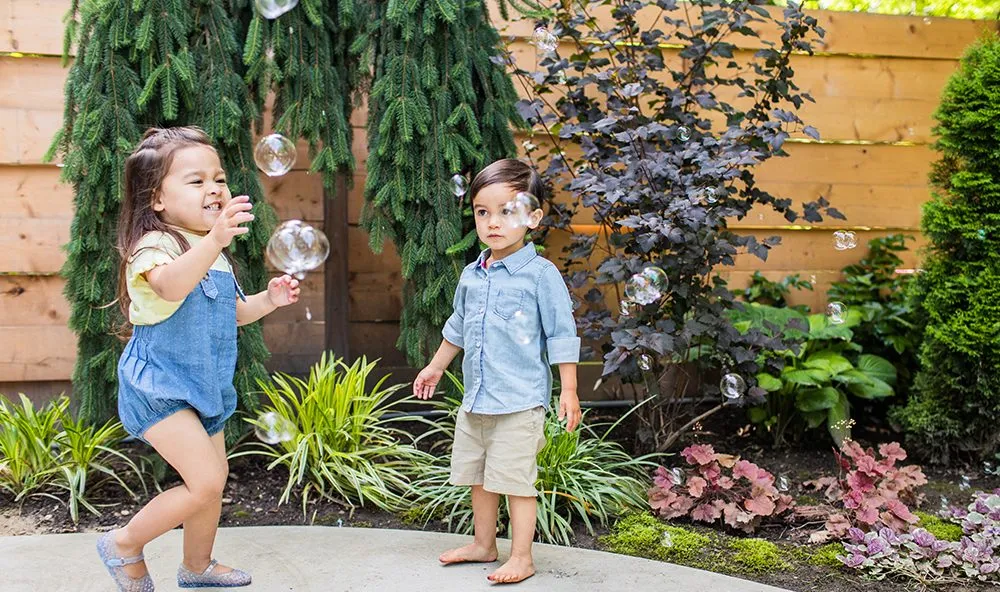
Playdates can happen anywhere kids play—a home, park, field, or backyard. Sometimes meeting on neutral ground can help alleviate possessiveness about personal space, belongings, even pets or people. A familiar setting, like a neighbourhood park, can allow your child and their friend to switch easily between playing together and exploring on their own.
Practise ahead of time
No matter the venue, practising certain interactions ahead of time can help your child prepare. For example, they can rehearse what to say and do when specific challenges arise:
- Joining play. At age 2, some children may still prefer to spend much of the playdate on their own. But you can help them learn how to join another child’s activity. Give them short phrases they can try out with their friend: “My turn?” or “Can I do it?”
- Setting boundaries. Help your child practise what to do and say when someone is doing something they don’t like. In the moment, you may need to offer more direct help, but it’s still a good idaea to empower your child to speak on their own behalf: “I don’t like that” or, “Space, please.”
- Noticing their playmate’s feelings. At this age, children often focus more on what they’re playing with than they do on their playmate. To help your child tune in to other people’s feelings, point out nonverbal communication whenever you see it: “You sat down in the spot she was sitting in. Now she’s looking at your chair and frowning. I think she wants her spot back.”
Read books
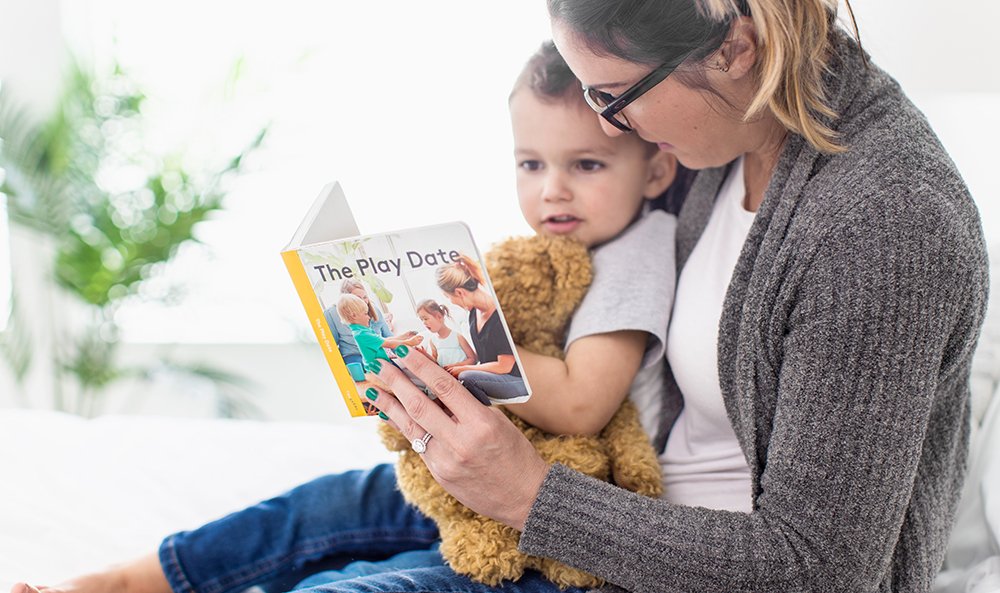
Books can help the idaea of a play date come alive and show how children and adults react in different situations. For example, in “The Play Date,” Zoe goes to visit her friend Ansel. They play together nicely for a while, but after a disagreement over a toy car, the big feelings come out.
As you read, talk about what’s going on: “Ansel wanted both cars and it looks like he’s really mad about it. He’s lying on the floor with his mouth wide open. Zoe seems sad. See how her mom helps her? And how they talk about what happened? Now Zoe and Ansel both feel better and are back to playing!”
If you’re the host
Your child’s understanding of time at this point is relative: they are just starting to understand terms like “soon,” “tomorrow,” and “after.” The morning of the playdate is a good time to mention it: “Your friend will come over right after snack.”
In addition to excitement, your child could experience a range of emotions before a friend comes over to play— they could feel nervous, shy, or even worried. As much as you can, remember that these feelings are natural and won’t necessarily last for the whole playdate.
Put precious items away
Just before the play date begins, talk to your child about the fact that their friend is allowed to play with all of the toys that you put out. Consider putting away your child’s most precious toys, books, or loveys. While learning to share is a long-term goal, you can also reassure your child that certain items don’t ever need to be shared.
Though impractical for most toys, having a few duplicates of high-interest playthings can be a big help for children engaging in parallel play. A block set for example, can be easily divided into equal parts.
If you’re the guest
A playdate at someone else’s home can be a good opportunity to talk about how to treat other people’s belongings: “We’ll clean up all of the toys before we leave, just like we do at home.”
When you’re on your way over, you can talk about how to behave in someone else’s home. Even young children can begin learning how to be a good guest, like knocking on the door or ringing the bell and taking their shoes off when they get inside.


Keep reading
3-year-old
4-year-old
Why experts recommend phonics to teach reading
Phonics is an essential part of an evidence-based approach to reading instruction. Learn more about phonics and why it matters.

3-year-old
4-year-old
3 ways you may already be helping your child learn to read – and what to try next
Reading books, singing songs, and reciting the alphabet are all important practices you may already be doing. Try these simple ways to broaden and deepen their early reading experiences.
3-year-old
4-year-old
My child just lied—what should I do?
Research shows 90% of children have lied by age 4. Here are 3 tips to encourage honesty in your preschooler.