

Self-feeding develops your baby’s fine motor skills

The pincer grasp—where your baby uses their thumb and fingers to pick up small objects—usually develops around this age.
Finding safe objects for your baby to practise their new skill can be challenging. If your baby is self-feeding, small round cereal, like Cheerios, can make a good option, as long as your baby is able to get them into their mouth on their own, and you are present to supervise.
Place a few Cheerios onto a tray for your baby. Your baby will rake, grab, and eventually pinch the cereal between their thumb and forefinger, bringing them to their mouth. If they can’t get the cereal into their mouth on their own, resist the temptation to do it for them. You can also let your baby practise with small pieces of banana, avocado, or pancake when in their high chair.
The purpose of self-feeding at this stage is to develop fine motor skills and learn about the different textures and tastes of food. Breast milk or formula should still be your baby’s primary sources of nutrition.

Keep reading
11 - 12 Months
13 - 15 Months
16 - 18 Months
9 - 10 Months
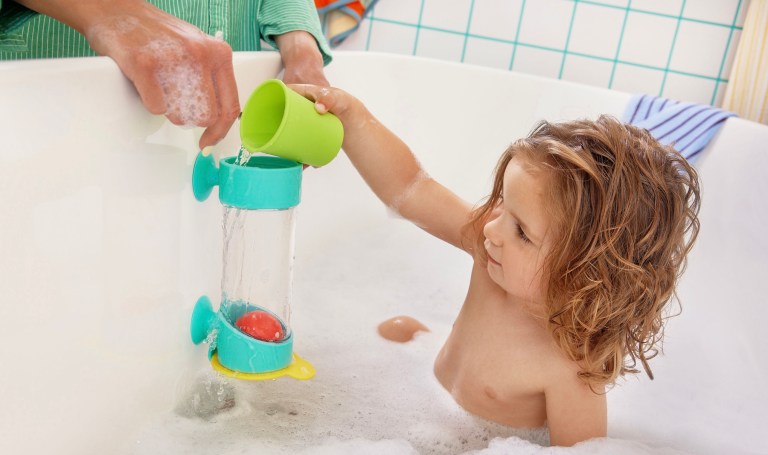
The surprising ways bathtime builds your child’s brain
When it’s just you and your child, face to face, bathtime becomes a natural opportunity to connect, play, and develop your baby’s brain. And The Bath Set includes thoughtfully designed tools for building new language, cognitive, and fine motor skills.

0 - 12 Weeks
11 - 12 Months
13 - 15 Months
16 - 18 Months
19 - 21 Months
22 - 24 Months
25 - 27 Months
28 - 30 Months
3 - 4 Months
31 - 33 Months
34 - 36 Months
5 - 6 Months
7 - 8 Months
9 - 10 Months
Why wooden toys make the best playthings
Wooden toys are a staple of Montessori learning. They're durable, beautiful, and inspire wonder for a child's budding imagination.


9 - 10 Months
Welcome to The Explorer Play Kit for months 9-10
Watch Lovevery CEO Jessica Rolph introduce the Explorer Play Kit for months 9 and 10 of your baby's life.