

The surprising ways bathtime builds your child’s brain
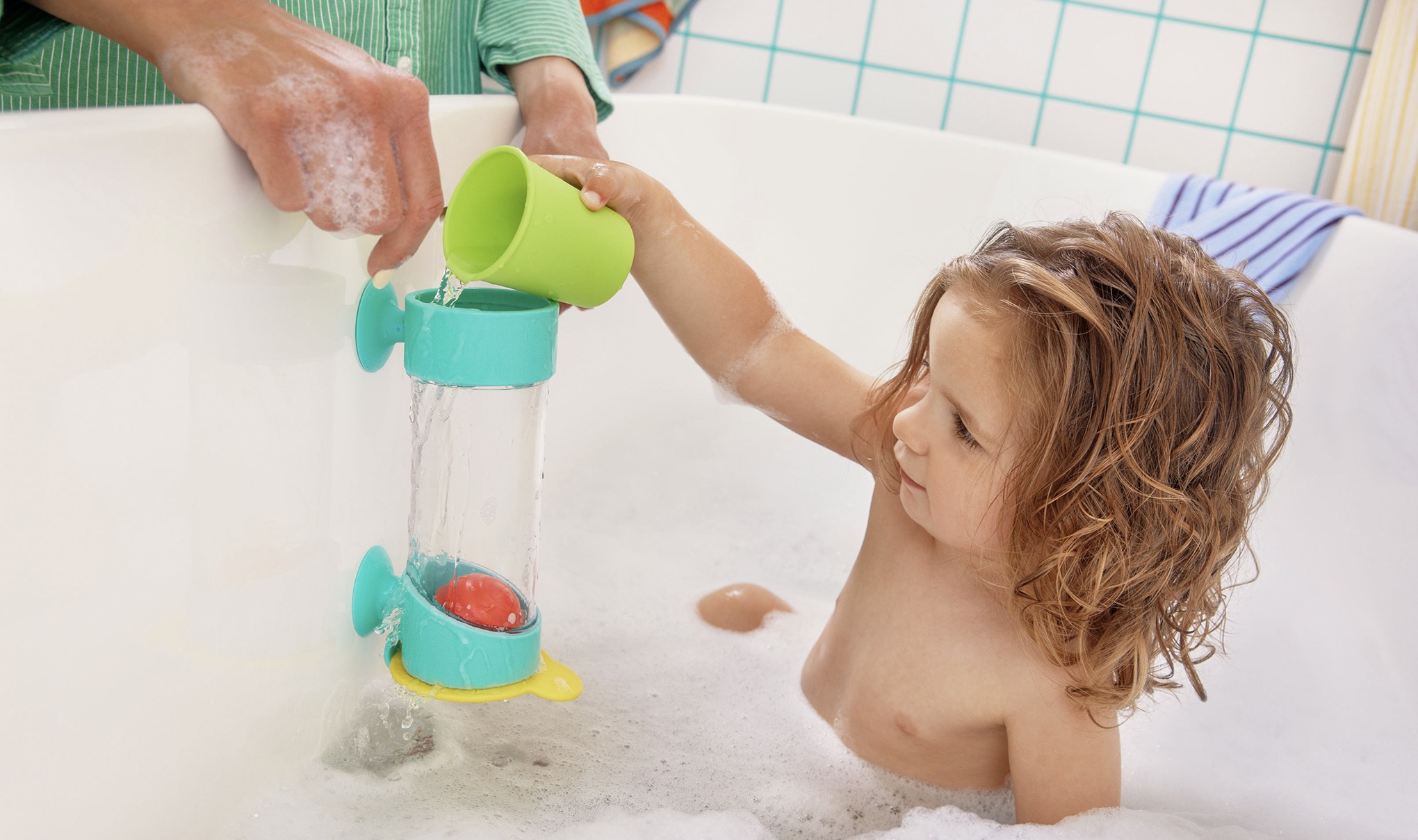
Watch your child in the bath and you’ll see a curious little explorer at work. They discover bubbles bounce, water splashes, and some toys float while others sink. All this sensory exploration actually helps build important neural connections that support their learning and development.
When it’s just you and your child, face to face, bathtime becomes a natural opportunity to connect, play and develop your baby’s brain. And The Bath Set includes thoughtfully designed tools to support new language, cognitive and fine motor skills.
You don’t need to turn every bath into a full learning session—often the most meaningful moments come when you slow down and simply enjoy being together ♥️ Giving them your full attention and staying within arm’s reach helps bonding and, of course, it’s essential for their safety.
Build language skills naturally
It may surprise you, but the bath tub is actually one of the best spots in the house for word learning. For your child to pick up a new word—its sound and meaning—they often need to hear it dozens of times in context. Since bathtime is part of their routine, you can repeat the same words again and again.
But the real magic is you. You’re right there, can make eye contact and chat back and forth. Research shows joint attention—focussing on the same thing at the same time—is a powerful way to grow vocabulary.
Start with early sounds. Babies tend to start babbling around 6 to 9 months. Some of their first sounds—m, b, and p—feature heavily in bath play. Our speech experts love: mirror, more, mix, mess; bubble, bath, boat, ball, book; pour, push, pop, puddle. When you interact with your bub, repeat and emphasise words that begin with these sounds: “Look how the b‑b‑bubble pops!”
Learn body part names
As you help wash, name and point to easily seen body parts—arm, leg, belly, toes. Use the I See You Bath Mirror to point out their nose, eyes and ears. Repeat the names every time you pour, rinse, dry and lotion them.
Practise positional words
Between 12 and 18 months, most toddlers begin to understand words like in and out. Encourage your toddler to explore where the Shake & Splash Bath Ball goes in and comes out—like through the Peek-A-Boo Boat, the In Then Out Bath Tube, the Fast & Slow Water Wheel and the back of the I See You Bath Mirror when it flips face‑down. Emphasise the positional words: “Put the ball IN!” and “Take the ball OUT!”
Describe the action as it occurs
Speech‑language experts advise parents to use more functional language during play. Simple verbs like fill, scoop, spin, drain and splash help your child communicate with you. As they collect water in the Scoop & Spin Bath Cup, you can say, “Scoop!” then watch the spinner twirl and say, “Spin!” As their language grows, try fuller sentences: “Can you fill the cup? Wow, look at it spin when the water drains out! Splash!”
Play peek‑a‑boo
Place the Shake & Splash Bath Ball on the Peek-A-Boo Boat, then cover it with the Scoop & Spin Bath Cup. Ask your child: “Where did the ball go?” Use gestures—arms out, palms up.
Encourage exploration, thinking and discovery
Make the most of your child’s curiosity with simple activities that support key cognitive skills:
Make cause and effect come alive: As your baby holds the handle of the Scoop & Spin Bath Cup, pour water so they see the spinner twirl. Change how much and how high you pour to help them link action and result. For older toddlers, show what happens if they drag the cup at different speeds, then let them try.
Let them discover themselves: Babies don’t recognise their reflection until around 18 months, but they love seeing a friendly face in the I See You Bath Mirror 🙂 When it floats, cover it with bubbles your child can wipe or wash away to reveal their reflection.
Make abstract concepts concrete: Use the Big & Little Duck to teach colours and counting. For example, “This duck is yellow” or “One yellow duck jumps in, then one white duck—now there are two ducks in the water.” As kids grow, introduce longer sentences: “Little duck fits in the boat—can two ducks fit? Can they push the red ball back and forth?”
Do a little experiment: Mount the In Then Out Bath Tube vertically (cap at the bottom, closed). Drop in the Shake & Splash Bath Ball or Big & Little Duck and let your child pour water to see what happens. Hint: the toy floats to the top as water fills the tube.
Develop dexterity and hand‑eye coordination
All that splashing and pouring helps build the small muscle control your child needs—from using utensils to writing letters.
Practise pouring and scooping: The Scoop & Spin Bath Cup requires your child to coordinate grip and wrist as they scoop and pour. Using both hands together is also an important foundational skill.
Build hand strength through play: Show your child how to remove the plug from the bottom of the In Then Out Bath Tube and pull apart the bands of the Fast & Slow Water Wheel. These motions strengthen the little muscles in their hands and fingers.
Support bilateral coordination: To play with the In Then Out Bath Tube, your child needs to hold the tube steady with one hand and pour with the other—a skill useful later for scissor use and shoe-tying.


Keep reading
11 - 12 Months
13 - 15 Months
16 - 18 Months
9 - 10 Months
The surprising ways bathtime builds your child’s brain
When it’s just you and your child, face to face, bathtime becomes a natural opportunity to connect, play, and develop your baby’s brain. And The Bath Set includes thoughtfully designed tools for building new language, cognitive, and fine motor skills.

16 - 18 Months
Introducing 3 new playthings to The Adventurer Play Kit for months 16, 17, 18+
The Adventurer Play Kit has three new playthings to keep your toddler engaged and challenged through play.

13 - 15 Months
16 - 18 Months
19 - 21 Months
22 - 24 Months
5 co-regulation tips to help your toddler manage their feelings
When your toddler is upset, it can be hard to know what to do ❤️ During the newborn stage, you helped your baby calm down by holding them, rocking them, and taking deep breaths. Now the process is getting more complicated. Your child’s emotions become more complex as they get older. Sometimes they don’t want … Continued