

11 - 12 Months
Perspectives on feeding: Picky eaters

“Children’s appetites change from day to day, and so it’s okay if they eat a little bit less one day and then make up for it by eating more on the other days of the week.”
Dr. Bahee Van de Bor, Specialist Pediatric Dietitian
Child nutrition and early brain development are profoundly linked. What goes into our babies, is essential to their brain growth. But that’s not to say achieving those optimal inputs is easy! The picky-eater routine can wear down even the most steadfast parent, and If we’re not careful, mealtime can become a battleground.
Jessica Rolph, your host, is accompanied today by Specialist Pediatric Dietitian Dr. Bahee Van de Bor. Bahee offers valuable tips for parents challenged with keeping their strong-willed babies healthy.
Key Takeaways:
[1:48] Did you know a child may need up to 10 encounters with a new food before trying it?
[3:04] What approaches to feeding help nurture an adventurous eater?
[5:35] What are some common reasons why toddlers become picky eaters?
[9:54] Dr. Bahee shares her perspective on disguising veggies (for example, hiding foods like cauliflower or broccoli in other foods).
[12:07] Is it recommended that parents insist on their children trying new flavors, even when they reject it?
[13:11] How to avoid creating pressure around mealtime.
[14:43] Dr. Bahee gives a few strategies to try with children who only want sweets.
[16:05] Can snacking have a negative impact on the child’s health?
[17:39] How should parents approach their children’s variation in appetite?
[18:11] Dr. Bahee expands on how to transform a picky eater into a more expansive eater.
Mentioned in this episode:
You can learn more about Dr. Bahee at UK-KIDS-NUTRITION.com
Dr. Bahee’s free download: 5 ways to help your child try new foods
Transcript:
Introducing new foods to toddlers
Jessica: So I’ve heard that you have to introduce a child to a food 10 times before they might be open to trying it. Is this true? And how do we do this with our toddlers?
Bahee: Yes, definitely. And I literally say to parents, offer it every single day, for 10 days. Because obviously, if you decide to only do it once a week, then it could take up to 10 weeks before they’ll try that food. So you don’t have to offer that food in the same way. So let’s say it’s a carrot, you could stir fry the carrots one day, you could steam it the other day, you could put it in a stir fry one day, you could roast it, you could pop it in a smoothie. So you can present it in lots of different ways as well, just to make it a bit more interesting and exciting and maybe one way… One cooking method might be more appealing than others, you might… It might help you discover that, “Oh, actually, my child really likes carrots with herbs or with this particular spice or whatever.” And so, it could be quite a nice fun adventure, but if you are focusing on helping you child become familiar and get them to start trying something new, then do offer it literally, every single day, for 10 days.
Baby-led weaning and other approaches to feeding
Jessica: So for creating an eater who loves a lot of different kinds of foods, where do you come down on the various approaches to feeding? For example, do you support spoon feeding and then moving to bigger textures or starting with baby-led weaning or this finger foods first method?
Bahee: So baby-led weaning is great because it is more a baby-led approach, obviously, but I… One of the things to look out for with baby-led weaning is sometimes you can get so caught up with it that you think you can’t let your baby have the wet textures, that you can’t feed them puree from a spoon or something like that, and that can backfire because then your child only learns to eat foods that they can hold with their hands, and they can start to pick feel like wet textures are unfamiliar to them, and that can sort of trigger picky eating further down the line when they’re toddlers. So with baby-led weaning, the principles are that really the baby is joining family meals from when they start weaning, and so it should be ideally a mix of textures, both wet and dry texture, so it’s perfectly okay to help them.
Guide the spoon to their mouth and sometimes at that age they will be very independent and they don’t want you to hold the spoon for them, they want to do it all themselves. So they might end up using their hands or their fingers to eat, and that’s absolutely fine because that mess is amazing. Like, it’s amazing for them to feel really good about that it… Good, wide variety of textures, so… Absolutely fine for baby-led weaning, because it means that baby is going to join in on the family meals. Obviously, for infants there should be no added salt or sugar or honey, for family meals so that those modifications need to be made, but apart from that, baby-led weaning is fantastic, but do feel that you can offer foods that are the wet textures, like yogurt or anything with a sauce, because actually that’s all part of normal meals that we want to see them eating. So it’s important to let them experience a nice variety of textures.
What makes kids picky eaters?
Jessica: You offer a course on how to end mealtime battles. What are some common reasons why toddlers become picky eaters?
Bahee: There’s a variety of reasons, and it really depends on when the baby presents the picky eating. But if it’s around that 18 to 20 months mark, that’s actually a perfectly normal time or normal phase where babies may start to reject foods that are actually really familiar to them, or even reject the possibility of new foods and that’s all down to just evolutionary times where pre-historically, babies may pick up some poisonous berries, and so it’s this innate behavior where they just automatically suddenly started to become really worried or worry about potentially unfamiliar foods.
But it’s a perfectly, perfectly normal phase and they will outgrow it. The only time where sometimes a small proportion of these babies, may go on to say, struggle with mild picky-eating in toddlerhood is if they don’t have enough varieties, enough exposure to a variety of textures, or if they have any undiagnosed reflux or prolonged vomiting, perhaps they picked up a tummy bug or infection. And so then they may start to associate feeding as being painful. And in that end scenario, they may start to pick up some picky-eating, usually picky eating heightens around the age of three years, and that’s when healthcare professionals may see families in their clinic where families are really worried about their child’s variety. So they’re not necessarily worried about the quantity of food their children need, but they’re concerned about the diet quality. So are there any potential vitamin and mineral deficiencies, for example.
18 – 20 month phase
Jessica: And so what I’m hearing is that typically babies start to become picky around 18 to 20 months, and that this is innate and natural, that they can be picky before based on any number of factors, but that sometimes if your child isn’t exposed to enough texture that they can actually become picky earlier. And then it peaks around three, and so we should just be expecting this. This is normal and this is happening.
Bahee: We know that kids that age are unreliable eaters. If they eat well some days, but there’s a few mealtimes that you know, generally it’s after school or nursery, where they’re a bit overtired, so they might not eat so well then. But usually all other meals, nursery is reporting they’re eating really well, or you have no concerns about other meals, and I really wouldn’t worry so much. I would just continue to offer family meals, continue to offer a range of foods. But if you’re starting to notice that meals are becoming stressful or baby is starting to be really showing signs of distress, particularly when it’s approaching mealtimes, or when you’re seating baby or toddler at the table, if they’re starting to sort of move their face away or start to show signs that they are really not happy to be at the table.
And you’re spending quite long periods of time trying to feed them, or if you’ve gone into this habit of feeding your child or baby rather than letting themselves self-eat because you don’t think they will eat what they need, then those are sort of starting to be what I call red flags, where potentially, meals are no longer an enjoyable experience and the picky-eating is starting to become problematic. So if they’re happy to touch foods and most foods, but they just show preferences for a few different foods or particular texture, I really wouldn’t worry about it, but if it’s consistent, and it’s consistently meal after meal after meal, you can start to see patterns and meal times are becoming very stressful then that’s a good time to start seeking help.
Should you hide veggies in food?
Jessica: That’s so helpful as a distinction, thank you for that. Okay, so what about disguising veggies, like hiding foods like cauliflower or broccoli in other foods?
Bahee: Yeah, great question, and it is a tough one to answer. Generally, I would say, please try not to do that, because then if your child is sort of getting towards that more moderate to severe end of the spectrum, it can actually backfire, especially if they have sensory issues and they dive into that meal because it’s foods that they’re familiar with, and it’s on their safe list. But then actually that sauce has disguised veggies in it, and then they start to pick it out, and suddenly they look at you and their face has that look of disappointment because there’s something in there that they really don’t like. And you suddenly start to lose a food that you know they usually will eat and it can start to make them feel anxious about trying new foods.
Now, if your child is really young and they’re more on the very mild end of this picky-eating spectrum, it’s not the end of the world if in the sauce you grated a bit of courgette or carrot or something like that, or you chopped up the veg into really, really small pieces. Most kids will eat that if they’re just in a more mild end of the picky-eating spectrum, but if they are sitting on the other end of the spectrum, then I will encourage you not to do that. It’s really important to let your child know. So if you are working really hard to get them to start eating, I don’t know, let’s say carrots, then I would let your child know, “Okay, so tonight on the menu, we have chicken and pasta, and we’re also going to have carrots in the tomato sauce like we’ve talked about.” So there’s no surprises when the little one comes to the table. They already know that there’s going to be carrots and they can make a decision about whether they want to try it or not. So it’s all being discussed beforehand.
Encourage your toddler to take a little taste
Jessica: And so do you believe in that trying… Like saying, “Okay, just a little taste.” Like a “No, thank you” helping, a just “You’ve gotta try everything, just one little taste.” Is that recommended?
Bahee: Yes, it has to be… You’ve got to time it right. So we call that tiny taste, or snake bites, or snake taste. You can call it whatever you like. So you could say to them, “Okay, I’m going to… Today we’re going to try that carrot like we’ve been talking about. I’m going to take a little bite first and I’m going to describe what it tastes like.” And then you’ll take a little bite and you’ll say, “Oh, that was really delicious. It did taste a bit soft in my mouth and it tasted a little bit like… “ A food that you know your child likes. But it is important to be very positive, still no pressure for them to try, but you could say, “Your turn now. Would you like to give it go?” So you’re still asking for permission, but you’re still keeping it very, very positive when you’re asking them to try a food.
Eat as a family, when possible
Jessica: So it sounds like pressure and creating pressure around meal time is a no-no. What else, what are the other things that really can kind of exacerbate any issues?
Bahee: Trying not to rely on separate meals, we’ve sort of made meals for children very kiddy, and it sort of undermines the abilities of children and really, from the age of 12 months, children can join in on the family meals, we don’t need to make separate foods for our children because that’s only sort of reinforcing – that your child’s believed to say, “Yes, you don’t like peas, so I’m not going to give you the peas. Here’s your pasta and plain chicken or whatever it is.”
So where you can, try to eat as much as you can with children. I totally understand we lead really, really busy lives and sometimes our time tables don’t match and young children eat much earlier than grown-up people do, but if your child is on that moderate-to-severe end of the picky eating spectrum, then it might be that you need to think of this as a project and make a few changes just so that you can help them along, because they do learn by watching the people who are the most important people in their lives, which is often their parents. So try to eat as much as you can with children and try not to serve separate meals, is my advice.
How to approach sweets and snacks
Jessica: Those are great tips. What about children who only want the sweets? Let’s say, on the menu is chicken and pasta sauce with some carrots included, some ice cream for dessert, and what about… Do you serve all of that together, do you serve the dessert after? If the child doesn’t… Only eats a few bites of chicken, are you still giving them a bowl of ice cream, how does this work with sweets?
Meals with desserts
Bahee: So again, it just goes back to, if it’s a family meal and there’s usually something sweet afterwards that, if it is a Friday night and it’s a pizza night, and there’s always ice-cream afterwards, that’s fine. Just make sure… Yeah, absolutely. There shouldn’t be any pressure, and if your child has felt they didn’t feel so hungry at that meal, they just had a few mouthfuls of the pizza, but they still fancy the ice cream, that’s absolutely fine. I wouldn’t say anything, I would just move along because when they’re really young, their appetites will vary, and yes, they will make room for the foods they prefer for sure, but their appetites change from day-to-day, and so it’s okay if they eat a little bit less one day and then make up for it by eating more on the other days of the week. So it’s important to, rather than focusing on the intake on one day, think about what they eat over a period of time.
Advice on snacking
Jessica: So can snacking have a negative impact on the child’s health?
Bahee: Oh, now, if you ask my French husband, he says, no, snacking is terrible. We shouldn’t be snacking, but that’s not really true. Little kids have small bellies, so snacking is absolutely fine, but it should be treated like a mini meal, so still keep it nutritious, it could be… There’s nothing wrong with fruit. I would say that because packaged snacks are so trendy, try and pick those… Keep those snacks at least that are low in sugar and salt for kids, so make sure you are reading labels. And always make sure that there is something that has a good quality carbohydrate food, some protein and ideally some vitamins and minerals, and that there will naturally be fats as well. So something like sliced fruit with peanut butter or rice cakes, and this might be the opportunity to give some calcium-rich foods like yogurt or a bit of milk, there’s nothing wrong with toast with a nut butter or something like that. So yeah, it can be really, really simple, snacking doesn’t need to be complicated. It’s only if your child is relying on… They just constantly snacking right until meal times, and then they don’t have any appetite for meals, then yes, that is then starting to become a problem.
Tips to transform a picky eater
Jessica: And is it okay if your kid eats like a bird one day, but then so much another day? How do we think about this variation in appetite?
Bahee: Perfectly normal and the only clue that you’re going to get there is by looking at their growth chart, so if their growth is being plotted, their height and weight has been plotted, you can say every six months or so, you’ll be able to see that pattern and if it’s following their curve, then perfectly normal. There’s nothing to be worried about.
Jessica: And you’ve helped a lot of children learn to like new foods in your clinic and through your blog and your courses, can you give me some tips on how to transform a picky eater into a more expansive eater?
Bahee: My number one would be, eat with your child. It’s really, really important and often overlooked. Have some set meal times and a feeding schedule that is regular, so you’re almost mimicking a nursery or a school setting, even if your child is at home with you. And find ways that you can expose them to food and do it in a way that feels natural and positive and do activities that you enjoy as well, so that you are more likely to do it. So for example, if you love cooking, then invite your children into the kitchen with you, there’s always something that they can do and often, when children spend time in the kitchen, it’s not because they like cooking too, they just like spending time with you. So they’ll do whatever you ask them to do. But if you’re more of an arts and crafts kind of person, then do some painting, do some arts and crafty projects with your child, but it could be around food, and that’s a really nice positive way of bringing in elements of food and teaching them about food in a way that’s meaningful to them, but also very, very positive.
Jessica: Thank you so much Bahee for being with us today.
Bahee: My pleasure.
Learn more about Dr. Bahee, including the download: 5 ways to help your child try new foods.

Posted in: 11 - 12 Months, 12 - 48 Months, 9 - 10 Months, Family Relationships, Food, Child Development, Feeding, Nutrition
Keep reading

12 - 48 Months
Building emotional learning with the Feel It All Mini Kit
The Feel it All Mini Kit from Lovevery brings together simple, thoughtfully designed tools – books, magnets, and games – help your child make sense of their growing world of feelings.
11 - 12 Months
13 - 15 Months
16 - 18 Months
9 - 10 Months
The surprising ways bathtime builds your child’s brain
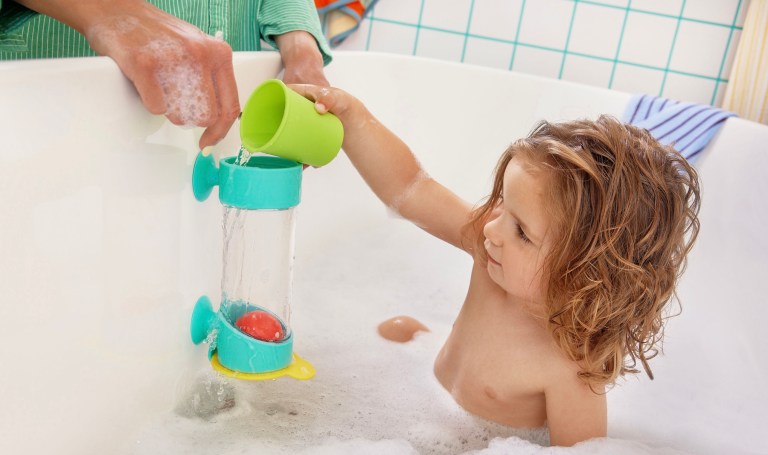
When it’s just you and your child, face to face, bathtime becomes a natural opportunity to connect, play, and develop your baby’s brain. And The Bath Set includes thoughtfully designed tools for building new language, cognitive, and fine motor skills.

12 - 48 Months
How to help your toddler or preschooler adjust to a new sibling
A new baby brother or sister can be exciting for a young child, but their perspective can change quickly. Read our tips to help with this big change.

11 - 12 Months
Meet our Organic Cotton Baby Doll, a timeless doll for everyone
The Organic Cotton Baby Doll comes in three skin tones and is gender-neutral. Read more about our Baby Doll for everyone.

11 - 12 Months
Our favourite gifts for baby’s first birthday
First birthdays are a big deal and worth celebrating. Gifts are one way to mark the occasion. Here are our 15 favorites for your one-year-old.

0 - 12 Weeks
11 - 12 Months
13 - 15 Months
16 - 18 Months
19 - 21 Months
22 - 24 Months
25 - 27 Months
28 - 30 Months
3 - 4 Months
31 - 33 Months
34 - 36 Months
5 - 6 Months
7 - 8 Months
9 - 10 Months
Why wooden toys make the best playthings
Wooden toys are a staple of Montessori learning. They're durable, beautiful, and inspire wonder for a child's budding imagination.


11 - 12 Months
Welcome to The Thinker Play Kit for months 11-12
Watch Lovevery CEO Jessica Rolph introduce the Thinker Play Kit for months 11 and 12 of your baby's life.

9 - 10 Months
Welcome to The Explorer Play Kit for months 9-10
Watch Lovevery CEO Jessica Rolph introduce the Explorer Play Kit for months 9 and 10 of your baby's life.

9 - 10 Months
Sometimes the best toys are not toys at all
Sometimes an everyday object can delight and engage your baby just as much as a toy. Learn how to introduce your baby to the playthings already in your home.

9 - 10 Months
Why tubes and containers are so essential to your baby
Your baby is starting to understand that objects fall through a tube, but stay put in a container. Learn how the Lovevery Clear Tube reinforces this real-world concept.

9 - 10 Months
How to help develop your baby’s intelligence
The most meaningful learning happens when your baby is exposed to everyday objects and events. Here are some ways to help your baby build their intelligence.

9 - 10 Months
Why you can actually have too many blocks
Blocks unlock powerful learning for babies, but child development experts recommend limiting the number of blocks you give yours. Learn why in our post.

9 - 10 Months
The fascinating powers of a simple Montessori egg
The Lovevery Wood Cup and Egg teach your baby how to use both sides of the body at the same time, essential for learning future tasks like getting dressed.

9 - 10 Months
How to get all the playtime your Lovevery toys have to give
Babies' interests evolve, but you don't always need to buy new toys in order to keep up. Lovevery shares new ways to play with familiar favorites.

11 - 12 Months
11 science activities for toddlers about airflow
You can help your toddler understand natural sequences related to airflow by fanning them, blowing across the top of a bottle, blowing bubbles, and more.

11 - 12 Months
Walking by their first birthday? Not necessarily
On average, toddlers start walking between 9 and 17 months. Here are some tips to support your child's walking development.

11 - 12 Months
Happy Birthday, Baby!
Lovevery CEO Jessica Rolph recaptures the strides both you and your baby have made in the first year. Celebrate how far you've come as a parent.

11 - 12 Months
Sensory play (and why letting your baby get messy is important)
Keeping your baby clean matters to most parents, but getting messy can teach important skills. Here are some fun ideas for messy sensory play.

11 - 12 Months
The brain-building benefits of letting your baby struggle
Letting your baby struggle may go against your instincts, but it can help build independence and resilience. Watch Lovevery CEO Jessica Rolph demonstrate why.

11 - 12 Months
Clap and sing along with the best playtime songs for baby
Clapping and singing to music provides early lessons in pattern recognition and language. Try our list of songs and lyrics to incorporate into playtime.
11 - 12 Months
Beyond the bedtime routine — why everyday rituals are important for your baby’s brain
Learn about how predictable sequences in your baby's everyday life help them begin thinking in more advanced ways.

11 - 12 Months
How doing mundane tasks like laundry can be full of meaning for your child
There is an art to narrating, explaining, and including your baby in everyday tasts. Watch Lovevery CEO Jessica Rolph model how.

11 - 12 Months
We did all the research on screen time and here’s what we found
Will time spent on a phone or tablet actually harm your baby? Lovevery sorts out the information sorts out the information to help you make informed decisions.

11 - 12 Months
What’s the real deal with the Montessori approach?
We love Montessori for its focus on fewer, high-quality playthings and real-world, sensory experience. Learn more about it and where and when we look beyond it.

9 - 10 Months
Helping your baby crawl…and why it’s important to keep them crawling
Pediatric occupational therapist Rachel Coley explains why crawling is vital to babies, and what can happen if they skip this stage.

9 - 10 Months
Self-feeding develops your baby’s fine motor skills
Your baby is learning to use a pincer grasp to pick up objects. Learn why puff snacks can be your baby's favorite (safe) way to practice their new motor skills.

9 - 10 Months
So simple, so fun! 5 new ideas for how to play with a blanket
Blankets can help your baby learn about object permanence, shape, and balance. Here are some fun and simple ways to incorporate blankets into playtime.