

What to look for in an activity table
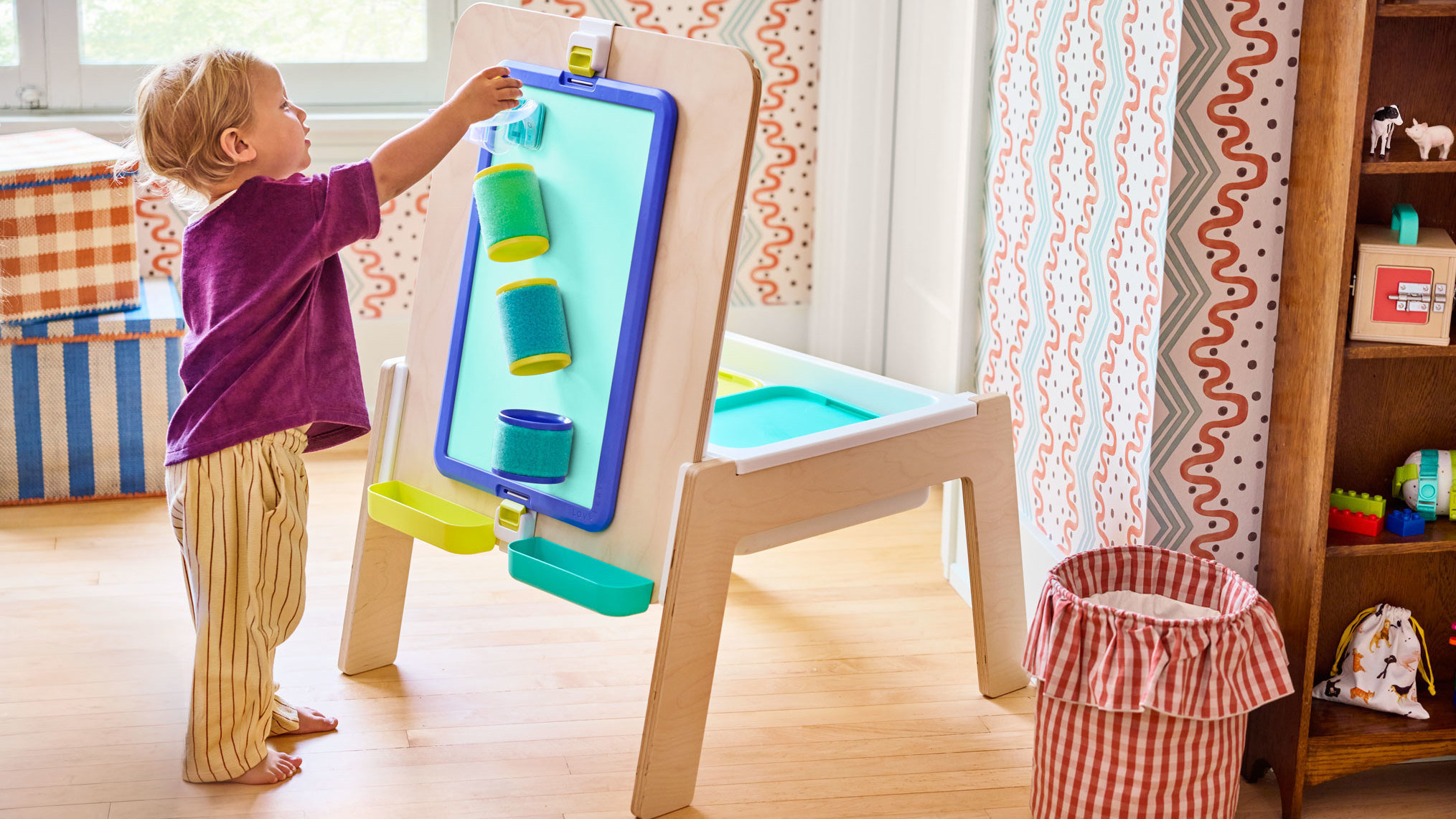
When you’re shopping for a children’s activity table, it’s natural to feel overwhelmed. There are sensory tables, art tables, play tables with storage, brick-building tables, water tables – how do you choose just one? You want something your child will come back to again and again, not something they’ll lose interest in or outgrow before long.
One way to narrow down the options is to think beyond what your child likes to do right now. Their interests can change quickly, and an activity table that offers different types of activities can give them more opportunities to play, explore, and grow into new skills as they get older.
Here are six things to consider when choosing a children’s activity table that they can enjoy for years to come:
- Versatility for different kinds of play
A table built for just one kind of activity may not get as much use over time. So it’s worth asking: how many different ways will your child be able to play with it? Can they explore sensory materials one day, make art the next, then build or pretend another day?
But how your child plays matters just as much as what they play. Moving between tabletop, vertical, and sensory play lets them use their hands and body in fresh ways – building coordination, fine motor control, and spatial awareness along the way.
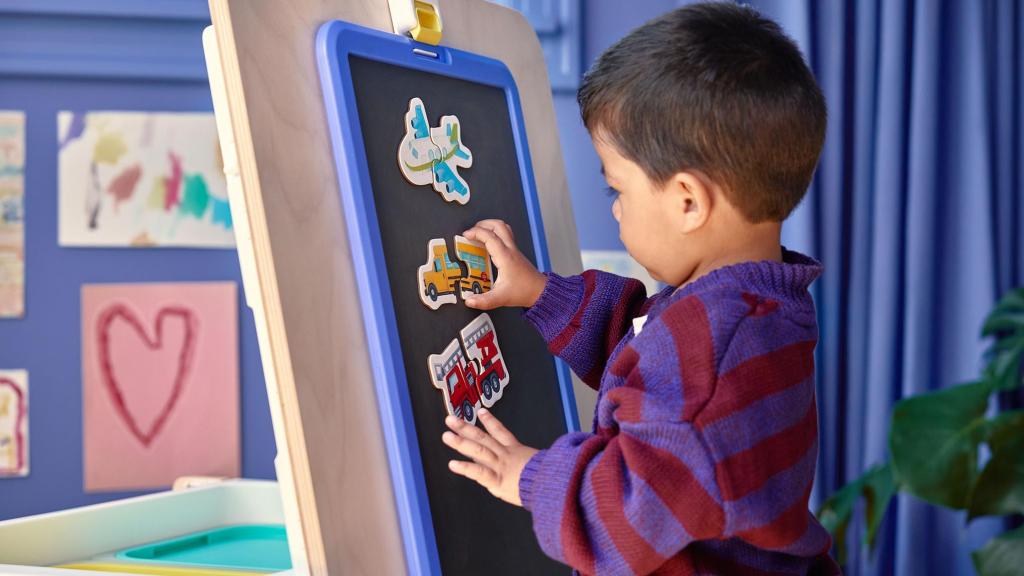
That variety is built into the Play Every Way Table, with five play modes in one space. Your child might explore the Sensory & Storage Bins in sensory mode, then stand up to draw in easel mode. Or, they may want to experiment with the Ball Run Builder or Magnetic Chalk Side of the Double-Sided Play Board, then turn it back into a tabletop for their next idea. They can find different ways to play in the same space, without needing a new setup for each one – and build new skills along the way.
- A height that can adjust as your child grows
The right size table for a toddler won’t necessarily work as well for a pre-schooler. If you hope to use an activity table for several years, look for adjustable legs or height options that can accommodate your child as they get taller.
The Play Every Way Table comes with four Table Leg Extenders that add about 6.4 cm to the total height. But height is only part of what it means for a table to grow with your child. Ideally, what they can do with it grows too. Look for play possibilities that can become more involved as their skills develop.
- Options for both tabletop and vertical play
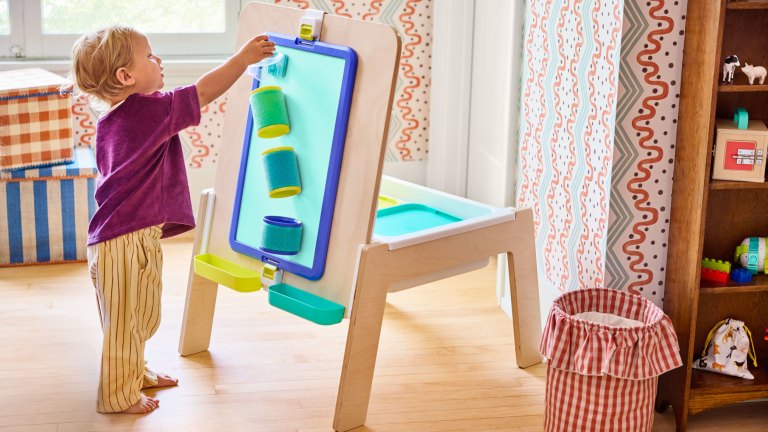
Many activity tables keep play on a horizontal surface. A table that can also become a vertical easel gives your child another position for drawing, building, reaching, and manipulating materials.
Here’s why that matters: On a flat surface, young children typically make movements from their shoulders and elbows. A vertical surface encourages wrist extension and finger movement. It also engages the core and coordinates both sides of the body.
The Play Every Way Table’s five play modes make it easy to move between horizontal and vertical play, with activities that go beyond painting and drawing. Your child can create with magnets on the Magnetic Chalk Side or attach the Big & Little Brick Board to build vertically using their own bricks. Moving familiar activities to a vertical surface can make play feel fresh, and it gives your child new ways to use their hands and body.
- Storage your child can access
When play materials are within reach, your child can choose what to do next without waiting for you to set it up. So when you’re looking for a play table with storage, think about who can actually reach it.
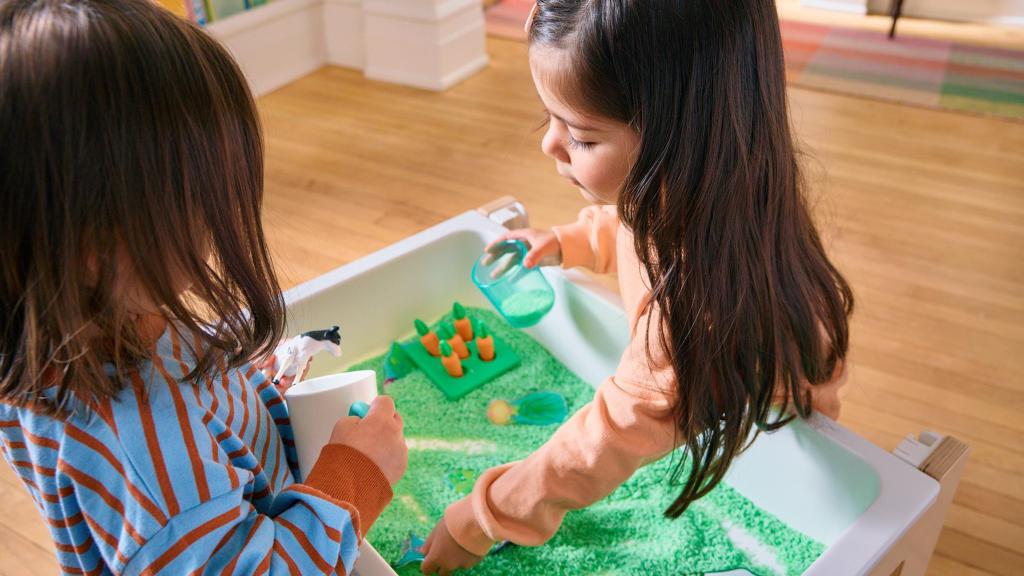
The Play Every Way Table includes two Catch-All Caddies for play and art tools. Its two Sensory & Storage Bins can store materials between activities and become the play space when it’s time for sensory exploration. The removable Sensory & Storage Bin Holder holds both bins in place and helps catch spills and crumbs.
Accessible storage can also make activities easier for you to prep and rotate. You can gather materials in the Sensory & Storage Bins, cover them with the lids, and bring them back out when your child is ready to play.
- Room to grow into new kinds of play
Your child’s interests change as they grow, and so does how they play. Look for an activity table that offers new challenges and ways to play as their skills develop.
At 18 months, a sensory play table might invite simple actions like digging, pouring, and mixing. By age 3, that same space can support more complex activities, like pretend play, matching, counting, and forming letters.
With the Play Every Way Table, your toddler or preschooler can experiment with cause and effect using the Ball Run Builder Accessories or practise early writing skills with the Strong Hands Water Pen. As their skills develop, add-ons like Dustless Chalk and Easel Paper Pads open up even more possibilities for writing and art.
- Fresh play ideas for fun and learning
Even a versatile activity table leaves the planning to you, and finding the best activities for your child can be time-consuming.

The Sensory Play Ideas guide, included with the Play Every Way Table, is filled with more than 100 age-based activities to help take some of that legwork off your plate. Some ideas focus on fine motor skills, like pouring or stacking. Others build early sorting, counting, and pretend-play skills.
As your child gets older, you can turn to the guide for activities that are right for their stage and skill level, so there’s always something new to try as they grow ♥️


Keep reading
18 - 48 Months+
Getting started with sensory play: Easy ideas for toddlers, pre-schoolers & up
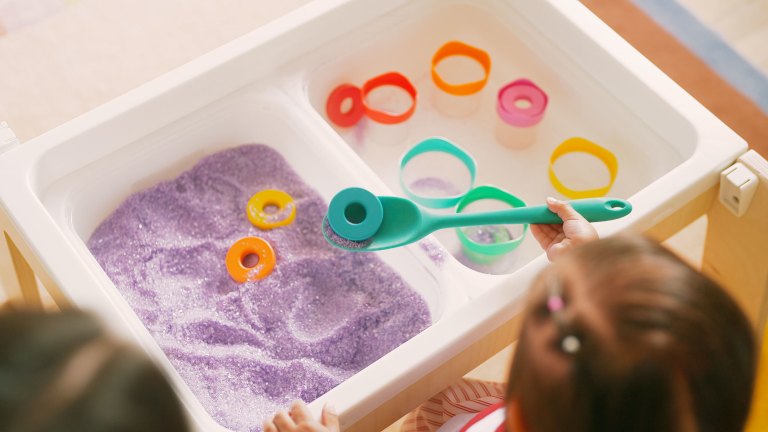
Sensory play doesn't have to mean lots of prep and a mess. With everyday materials, a sturdy tub and a theme your toddler loves, it's easy to get started. Try three age-based sensory bin ideas from the Play Every Way Table's Sensory Play Ideas guide, plus tips for an easy clean-up.

18 - 48 Months+
How toddler art helps build fine motor skills for handwriting
Long before your toddler picks up a pencil, they're building the hand strength and control writing requires. Art is a playful way to get there. From water painting to drawing on a vertical easel, the Play Every Way Table encourages grip, finger precision and wrist control that lay handwriting's foundation.
18 - 48 Months+
What to look for in an activity table
With so many kinds of activity tables, how do you choose one your child won't outgrow? Look beyond their current interests. Here are six things to consider, from versatile play modes and adjustable height to accessible storage and fresh ideas, so your child can keep playing and growing for years.