

0 - 12 Months
Why teach sign language to your baby
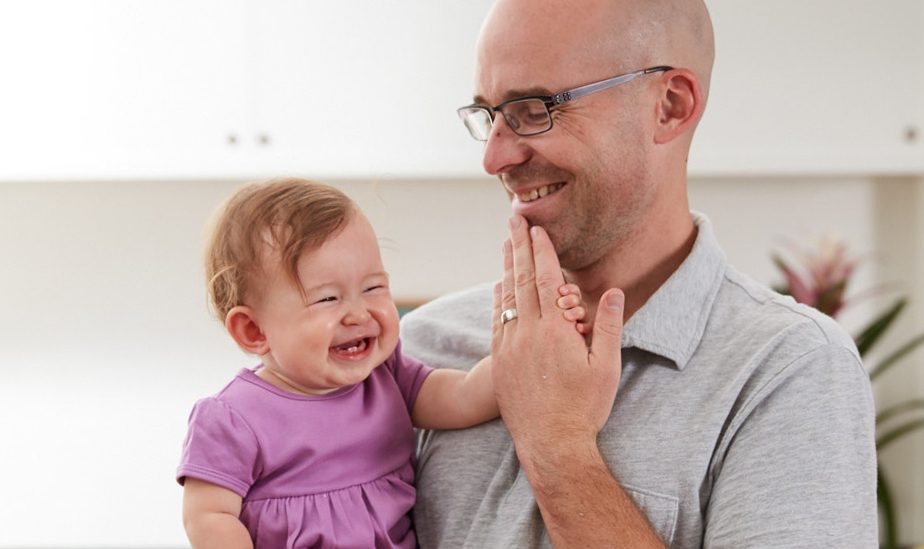
“People say that the baby sign language can help with reducing frustration for the child, but I do think it is a form of communication that goes two ways. A lot of times we feel frustration when we can’t understand what our child means as well.”
Joy Jackson, @lyric_laughter_learning
Babies’ understanding of language comes well before their ability to speak. This also can be the case with their motor skills. Most babies will wave bye-bye before they can say the words. These are a few of the reasons signing works well for babies. It gives them another means of communicating. Plus research shows that babies who learn basic sign language develop pathways for communication sooner than they would otherwise.
Jessica Rolph welcomes Joy Jackson (@lyric_laughter_learning) to today’s episode. She has been using sign language with her daughter from the time she was 4 months old. Joy shares why she chose to teach her sign language and how this has enhanced her communication skills.
Key Takeaways:
[1:16] Joy explains why she taught herself sign language in order to share it with her daughter.
[4:12] Joy started teaching Lyric sign language at 4 months old. When did Lyric start using signs?
[5:19] Is there any benefit to teaching sign language to verbal children?
[6:08] What are some common misconceptions about sign language and teaching babies sign language?
[8:15] Joy talks about the difference between baby sign language and ASL.
[9:29] If a parent is just going to use six or seven signs, what are some particularly useful ones?
[10:42] How many signs did Joy’s baby have when she was 1 year old? What can parents expect?
[11:50] Is a baby who can sign considered bilingual?
[13:02] How and why to teach emotion signs.
[14:25] Some great reasons to invest the time necessary to teach our babies and young children sign language.
[16:43] Jessica’s takeaways of today’s show.
Mentioned in this episode:
Joy’s Instagram: @lyric_laughter_learning
Transcript:
If you’ve ever tried to learn a second language, you likely understood what others were saying long before you could engage in a two-way conversation.
Babies are no different. Their understanding of language comes well before their ability to speak. This also can be the case with their motor skills. Most babies will wave bye-bye before they can say the words. These are a few of the reasons signing works well for babies. It gives them a means of communicating before they can verbally form words.
Plus research shows that babies who learn basic sign language develop pathways for communication sooner than they would otherwise. Joy Jackson has been using sign language with her daughter from the time she was 4 months old. I asked her why she chose to teach her daughter, Lyric, sign language.
Can Babies Understand Sign Language?
Joy: So, it’s funny that it started by me watching Meet the Fockers, a very long time ago. I know that that sounds super superficial, but I just was so entertained by that movie. Robert De Niro’s grandson, or the child that played his grandson, used baby sign language in that film, and that was 2004. So I was right out of college and not even thinking about kids, but I just found it extremely fascinating and just kept it in my head for all those years. And then 14 years later when I had my daughter, that is when I’d signed up on my registry to receive all kinds of baby sign language books, because I just never forgot. I’m like, “I’m definitely gonna do this thing.” And that was where it started.
I remember saying when my daughter was an infant, like, “I wanna know her thoughts. I can’t wait to know what she’s thinking,” ’cause her face was so expressive and all of those things, and so I was really encouraged because that was something that I was hoping to see the benefits of. I wanted to hear her thoughts sooner than I know that she would be able to say it. But what I did end up learning over time is that… I’ve started to change my language from saying it’s a great way for them to communicate before they can speak, because what I’ve read or what I’m hearing from the deaf community is that saying that children can communicate before they speak is kind of putting verbal language on a higher pedestal than signed languages, because it’s like, “Oh, this is a thing they can do before they reach the epitome of language, which is verbal.”
So I’ve changed my language to start saying that I wanted to include an additional form of communication from my daughter that she may be able to access some signs before verbal language. So for instance, I think my daughter actually was speaking some words prior to signing, and I think that’s one myth, is that people believe that your child will be able to sign before they speak, and really sign language… Or that sign language is easier and it really what it is, is that there are some signs that are easier for infants to imitate than some words.
Joy: For instance, my daughter did say mama and dada prior to any sign, because those are easy words to say. But she wasn’t able to sign that word which is a little bit more complicated. They have to take their thumb and tap it on their chin for a mother and a tap it on their forehead for dad. And that was a lot more complicated than saying those words for her, so just including this additional form of communication was helpful in trying to understand some of her needs early on.
When Can You Teach a Baby Sign Language?
Jessica: So before a child can actually verbally express themselves, they’re understanding so much more. They can’t yet verbalize, but they’re communicating with you and they’re having that back and forth, and that actually builds these brain pathways that are really healthy for their development. So it’s really inspiring to hear how you have brought this into your daughter’s life. And so you first introduced Lyric to sign language at four months.
Joy: Yes.
Jessica: When did she start to use it, and why did you start at four months?
Joy: I started at four months because I think that was when she was sitting up. I don’t know what I saw in her, but I could see that we were actually starting to non-verbally communicate in other ways through… And so it started off at meal time. That was the first time, and I guess a lot of times people say that the baby sign language can help with reducing frustration for the child, but I do think it is a form of communication that that goes two ways. A lot of times we feel frustration when we can’t understand what our child means as well. And so for them, when they need something, they cry for almost everything at this age, and this gives them another tool to communicate.
Joy: So we started at meal time, and it was just simply more or all done, because that was the time where she seemed to… She would yell, that was how she communicated that she wanted something and I was just trying to help her, trying to distinguish because I would try to offer her more and then she’d yell and then I take it away and she’d stop yelling. I was like, Okay, let’s try to add a sign to this. So more and all done are where we began.
The Benefits of Sign Language for Babies
Jessica: So what if the baby is already using words, is there any benefit to teaching sign language to verbal children?
Joy: Absolutely. And I think if you’re using both languages or trying to incorporate ASL signs along with your verbal language, you’ll see that there will be some words that they can’t speak yet, and some signs that they can… And it’s an interchange. So just like with any verbal language, it’s a continuum. It’s not like, “Oh, this is complete.” Certainly, there’s no child that you’d look at and say, “Well, English is complete” or “Spanish is complete. Now we can move on to a different language.” Since it’s happening on a continuum, to me, I’ve found a lot of value in continuing to immerse her in both as much as possible.
Sign Language Myths
Jessica: And I’ve heard some misconceptions, that signing interferes with learning how to speak. What are some other common misconceptions about sign language and teaching babies sign language?
Joy: Yeah, there are a number that I’ve discovered, and one is that teaching children to sign will prevent tantrums. And so, again, realizing that communication goes two ways, and if you’re actively using the sign, the goal is not just for your child to use it, that you’re using it also. Is that a lot of what’s ASL signs do is helped the adults to reduce their frustration, ’cause it helps you to understand your child. As my daughter has reached toddler-hood, I’ve found that really helpful, when she’s using baby-talk and you can’t understand her words, if she signs along with speaking, sometimes it definitely helps me, it confirms what it is that she’s trying to say. But the other piece is that, learning to use a different language doesn’t prevent developmentally appropriate behaviors. A two-year-old is a two-year old, and if they want something and they know how to communicate it now in verbal language and a signed language, they’re just gonna demand that thing more. [chuckle] It doesn’t make them not cry or get upset, or want that thing instantly.
Joy: So, if they’re signing something that you can’t give them or the answer is no to, they will still have that tantrum, because now they have two ways to communicate with you. I have a couple of instances on my page, where I’ve asked my daughter, “Are you ready to go to bed?” And she will furiously sign “No” while crying. [chuckle] “Actually, no, I don’t wanna go to bed.” So, again, I think it can reduce some frustration, but know that you will still see developmentally appropriate behaviors play out in the same way, because again, it’s just an additional form of communication for them to make their demands on you.
Jessica: So, there’s no 100% cure for tantrums. Okay, we get it.
Jessica: You mentioned ASL. My brother uses adaptive sign language. He has special needs, I call him my little brother, he’s 37 years old. And he has adapted certain signs. He’s got a number of signs that he uses that are not possibly accurate in ASL, but we’ve adapted those signs. And I think that that happens sometimes with babies as well. Can you talk more about the difference in baby sign language and ASL?
Teaching Baby Sign Language vs. American Sign Language
Joy: Absolutely. So American Sign Language is a language like any other, with complex grammar. The facial expressions and mouth morphings, if you watch someone who is deaf using sign language, you see different mouth shapes that they’re making, that is actually part of the language. All of that is ignored in Baby Sign Language. Baby Sign Language just adapts ASL signs and isolates them without the grammar, so essentially it almost should be called ASL… Or just should be called American Sign Vocabulary. I think that would probably be a more accurate term, because the language like any other is very rich and there is culture, there are dialects of it that I’ve learned, I’ve seen a whole page on African-American sign, like a vernacular. So there are different cultures in different regions of the country that the word signs will vary, and all of that is not taking into account with Baby Sign Language, which is just their simplified vocabulary that is taken from ASL signs.
Jessica: What are your favorite… You’ve mentioned some of the favorite first signs. We have a first signs book at Lovevery, and I was just curious if you had ones that you remember really loving. You’ve already mentioned some, but some signs that you’ve really loved teaching Lyric when she was a baby, that really worked in your life, that you’ve used frequently over and over again. If a parent is just gonna use six or seven signs, what are those favorite ones?
Joy: So, I mentioned “More” and “All done.” I would add to that “Help.” So, “Help” was something that a baby needs all the time, and so, it was a sign that I focused on. She was sitting up, but would roll over easily, so before I’d lift her, I’d say, “Do you need help?” Or she dropped something, “Do you need help?” It was a sign that I used so often, and I think after “More” and “All done,” it was the next sign that she picked up and used constantly.
Joy: After that, I started to label things in her world that she got really interested in, and so, that was things in nature. “Bird,” “Water” was helpful, but a very difficult sign. You have to create the letter W by putting your thumb over your pinky for “Water.” That is very difficult. She still can’t do that at two years old. But she would tap her hand on her chin. Something that was fun was “Dance,” and she would sign that every time she heard music, indicating that she wanted to dance or wanted us to dance with her.
Jessica: Oh, so cute.
Jessica: So how many signs does Lyric have, or how many did she have at let’s say a year? What can parents expect?
Joy: At a year, I would say she had three or four, and that would be the; more, all, done. And then again, here’s what’s tricky. At that age those were the signs that she could produce herself, again, because the language is a continuum, she demonstrated understanding of more signs than she could actually produce. But she was just beginning at 11 months, so I would say about four. And then once she… I think, I mean it’s either brain development or once she saw the benefits of being able to communicate with me in this way, it kind of picked up from there, and that’s when I committed to it more and started doing all of the research that added to just the baby signs that I was doing.
Jessica: Okay, I love hearing that. We talk about how research shows that babies who learn this basic sign language develop those pathways for communication sooner than they might otherwise, and again, that babies are taking in and they can receive language and understand you, before they can express it themselves. So it’s super helpful to hear that come alive with you and Lyric.
Bilingual Babies
Jessica: So is teaching your baby sign language considered bilingualism? Because the research is so clear that bilingualism is so healthy for brain development and really does enrich those pathways for communication. I think that’s the link, that you’re enhancing the pathways of communication, you’re also creating alternate paths for the same word, that there are different ways to express that.
Joy: Yes. And so at least from what I’ve read, I think there’s benefits if you’re just doing Baby Sign Language, but the broader benefits would come from learning more of the language, which is a big undertaking. So for me, because I’m not fluent in ASL, is I’ll watch videos and I’ll learn phrases so that I’m using the proper grammar, and I’ll introduce the phrases to my daughter. So learning simple things about question words, because I think that will be helpful to her. So something I’ve started recently is, “How are you?” And I’ve learned how to sign that, so that she can then… And then we’ve learned emotion signs. So I’ve found that to be really helpful because it doesn’t take a lot of complex grammar to have that conversation in a grammatically correct ASL way.
Signing Emotion & Emotional Learning
Jessica: So tell me more about how you’ve used emotion signs with your daughter. I would love to hear some stories. I think that’s such a brilliant idea.
Joy: So the first thing that… And this is actually another interesting reason for signing was when I was nursing her. So when I’m nursing Lyric, when I was first teaching her emotion words, I would raise my eyebrows and smile and then sign “happy,” which is tapping your chest upward. And I’d smile and I’d say, “Happy.” And then I would frown my face and sign “sad,” which is kind of… I don’t know, it’s so hard to describe, but basically flinching your fingers almost as if you’re about to make a fist, but you don’t quite do it right in front of your face. And so I would just go back and forth, and she would imitate those facial expressions while she was nursing, again, ’cause she didn’t need to use her mouth. For the most part, she would raise her eyebrows and furrow her eyebrows when I did “happy” and “sad.” And then she started using them in context at a later time.
Jessica: That is so sweet. I love thinking about that, and I remember I used to do that where we didn’t sign “happy” and “sad.” I love that idea. If I had another baby, I would be doing that, but we would do happy and sad. We would point to faces and pictures of babies who are happy and then babies who are sad, and I think that early emotional learning can be so powerful. Joy, it is such a joy to talk to you. And I just before we say goodbye, I just wanted to hear if there’s anything else that you wanna share with parents around, convince us. Why should we invest this time into teaching our babies and young children sign language? And just tell us a little bit more about why it’s been so meaningful for you in your life with your daughter.
Joy: So again, it started off as me wanting to introduce an additional form of communication, again, some signs that she could access sooner. It’s been great being able to communicate things with her silently from across the room without tone. So I think that, especially having toddlers, we are concerned with tone quite often in our own frustration. And so I’ve felt good about not having to think about the volume of my voice when signing “no,” or signing “stop,” that I can show it on my face, but it has helped to manage me in not having to think about tone so much, but she totally understands what I’m saying in those moments. I’ve also, when I’ve seen her with other children, I’ve been able to communicate those same things or I might… I’ve seen her fall and been able to ask, “How are you?” And she doesn’t have to come all the way over to me to let me know. She can communicate in sign how it is that she’s feeling.
But I’ve just gained such an appreciation for the language. It’s such a beautiful language, which I think people experience as they learn any language. And there’s a whole culture behind it that I would love my daughter to be immersed in as she gets older. I want us to kinda take that journey together, and at this point, I don’t think there was any other language that I really had any chance of learning. This is one that I feel like because of the number of resources, it’s something that felt a little bit more tangible to me, with work. But something that I’m hoping to be able to add to the list of things that I can say that I can do that that will also benefit other people, because there are a number of people that don’t have access to the content that we deliver, because so many of us don’t know sign language, and I really do think it’s something that should become mandatory for a number of us because we’re marginalizing a big percentage of our population by not knowing this language.
Jessica: That is so inspiring, Joy, and it’s so fun to think through this interview. I just have these images of you and Lyric and I’ve seen some of the videos of you and your daughter, and they’re just the sweetest. So, thank you so much for being with us today. We’ve loved it.
Joy: Thank you so much. It was my pleasure.
3 Episode Takeaways for Parents
I didn’t realize there was so much to know about baby sign language.
Takeaway #1:
Consistency is key, and learning a second language takes patience. The child has to be immersed in sign language, like any other language.
Takeaway #2:
In addition to signs like “more” and “all done” – two popular baby signs – “help” is also a very helpful sign! Babies need lots of help and this sign can be incorporated into a baby’s conversation regularly. “Dance” is also a fun one, and emotion signs are great for toddlers in particular.
Takeaway #3:
Signing can reduce frustration for both parent and child because it gives you another avenue for communication. However, if your child is asking for something that you don’t have or are not willing to give them, knowing the sign will not prevent them from getting upset.
You can find more sign language tips on the Lovevery blog at lovevery.com.au.
Keep reading
11 - 12 Months
13 - 15 Months
16 - 18 Months
9 - 10 Months
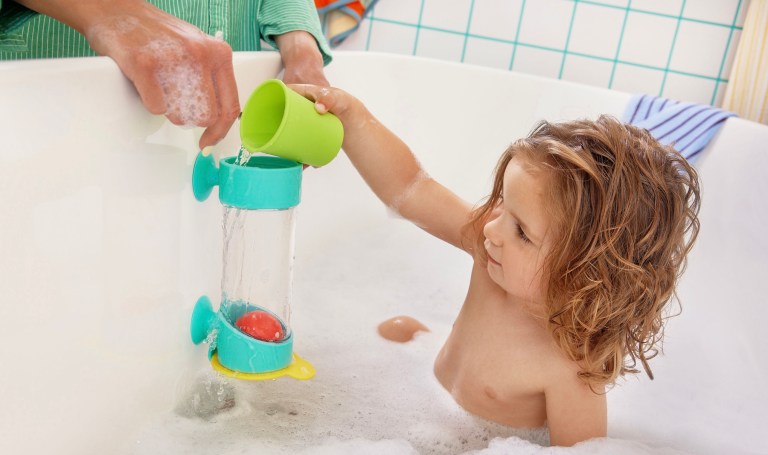
The surprising ways bathtime builds your child’s brain
When it’s just you and your child, face to face, bathtime becomes a natural opportunity to connect, play, and develop your baby’s brain. And The Bath Set includes thoughtfully designed tools for building new language, cognitive, and fine motor skills.

16 - 18 Months
Introducing 3 new playthings to The Adventurer Play Kit for months 16, 17, 18+
The Adventurer Play Kit has three new playthings to keep your toddler engaged and challenged through play.
0 - 12 Months
0 - 3 Months
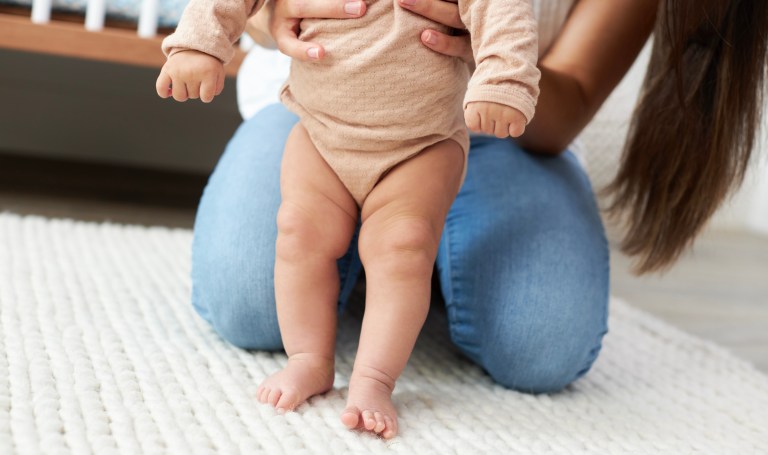
Supported standing practise for your baby
Between 2 and 4.5 months, most babies are able to stand up with support and bear some weight on their legs.

18 - 48 Months+
2-year-old
3-year-old
4-year-old
Real Life Play Kitchen: 7 ways to help your child be responsible with running water
Sensory play holds a special fascination for children, which is why we designed the Real Life Play Kitchen to include running water.
18 - 48 Months+
When it comes to play kitchens, real life can be even more fun than pretend—by Lovevery CEO Jessica Rolph
A play kitchen should double as a sensory laboratory where your toddler can practise a whole range of motor skills.

0 - 12 Months
2-year-old
3-year-old
The Lovevery App for parents: Stage-based activities and expert advice for the early years
Each week, you'll find a new, curated selection of plaything activity videos, articles, and expert advice related to a key aspect of your child's development.
18 - 48 Months+
Why real instruments are the best musical toys for young children
Make the most of musical play with playthings that work like real instruments. Here are the 6 best instruments for beginners.

0 - 12 Months
2-year-old
3-year-old
5 tips for navigating the addition of a new sibling
Introducing a new member of the family can bring a lot of excitement and joy—along with some unknowns. Here’s some expert advice to help ensure a smooth transition.
0 - 12 Months
0 - 12 Weeks
3 - 4 Months
5 - 6 Months
Our award-winning Play Gym just got an update—see what’s new
After numerous play studies, weeks of in-home testing, and thousands of customer surveys, we are excited to announce updates to our award-winning Play Gym, now designed with even more developmental support for your baby.

18 - 48 Months+
28 - 30 Months
Why wooden blocks are actually the best STEM toy
Why are blocks so foundational to childhood? Block play supports language development, STEM concepts, visual spatial skills, and more.

13 - 15 Months
16 - 18 Months
19 - 21 Months
22 - 24 Months
5 co-regulation tips to help your toddler manage their feelings
When your toddler is upset, it can be hard to know what to do ❤️ During the newborn stage, you helped your baby calm down by holding them, rocking them, and taking deep breaths. Now the process is getting more complicated. Your child’s emotions become more complex as they get older. Sometimes they don’t want … Continued

13 - 15 Months
16 - 18 Months
19 - 21 Months
22 - 24 Months
Wish your toddler would focus? Try playing together first
When you read a book or practise stacking blocks with your toddler, you do more than bond with them. You also help increase their attention span ❤️ Two related studies published in 2019 and 2022 found that when parents and their toddlers focused on a toy together, the toddlers paid attention a little longer and … Continued
13 - 15 Months
16 - 18 Months
19 - 21 Months
22 - 24 Months
The best Montessori and learning toys for 1 year olds
At 12 months old, your toddler is more mobile and curious than ever. The best toys support mobility, fine motor skills, language, and independence. See our best Montessori toys for 1-year-olds.

0 - 12 Weeks
11 - 12 Months
13 - 15 Months
16 - 18 Months
19 - 21 Months
22 - 24 Months
25 - 27 Months
28 - 30 Months
3 - 4 Months
31 - 33 Months
34 - 36 Months
5 - 6 Months
7 - 8 Months
9 - 10 Months
Why wooden toys make the best playthings
Wooden toys are a staple of Montessori learning. They're durable, beautiful, and inspire wonder for a child's budding imagination.

13 - 15 Months
There’s no such thing as bad weather, just bad clothing
Research shows that children benefit from playing outside, regardless of the season. Learn how to keep playing outdoors even when the weather is cold or rainy.


13 - 15 Months
Welcome to The Babbler Play Kit for months 13-15
Watch Lovevery CEO Jessica Rolph introduce the Babbler Play Kit for months 13 to 15 of your toddler's life.

13 - 15 Months
Your toddler’s on top of the world when they make you laugh
A toddler's budding sense of humor is a sign of their cognitive, social, and emotional development. Learn five ways to help nurture your child's funny bone.

16 - 18 Months
Welcome to The Adventurer Play Kit for months 16-18
Watch Lovevery CEO Jessica Rolph introduce the Adventurer Play Kit for months 16 to 18 of your toddler's life.

16 - 18 Months
Puzzling over puzzles—what the progression looks like
Puzzles build fine motor skills, hand-eye coordination, and problem-solving strategies. Here is the progression of puzzle solving for babies and toddlers.

16 - 18 Months
Introducing the Wooden Stacking Pegboard—the Montessori way
Watch Lovevery CEO Jessica Rolph and Montessori expert Jody Malterre as they show some of the many ways your toddler can use the Wooden Stacking Pegboard.

16 - 18 Months
Rethinking milestones—when to relax and when to talk to your doctor
Here are some thoughts to consider if you find yourself battling worries over your toddler’s milestones or suffering the effects of child comparisons.

16 - 18 Months
When should my child be able to stack 6 building blocks?
Research confirms what kids, parents, and teachers have known for centuries: playing with blocks is fun for your toddler and promotes many kinds of learning.

13 - 15 Months
8 ways for your toddler to (safely) play with small objects
With a few simple supplies, you can create fun DIY activities that help your toddler safely enjoy the benefits of playing with small objects.

13 - 15 Months
Stacking, nesting, and matching—when do they happen?
Stacking, nesting, and matching are three foundational toddler skills. Learn when to expect your toddler to begin doing each.

16 - 18 Months
4 concepts your toddler’s brain is ready for now
Heavy and light, loud and quiet, big and small—developing brains love to grapple with opposites. Here are some fun ways to explore opposites with your toddler.

16 - 18 Months
Why “you worked so hard” beats “you’re so smart”
A growth mindset leads to resilience, grit, and stamina, and teaches your child that their intelligence, capabilities, and talents can grow the more they learn.

16 - 18 Months
First, next, then—giving your toddler comfort and structure
For toddlers, routines provide comfort, structure, and a way to predict what’s going to happen next. Learn how to establish and maintain toddler routines.

13 - 15 Months
Squirming and grabbing pages: what reading looks like at this age
Reading with your toddler probably doesn't feel much like "reading." Don't give up—here's why even a minute of reading is still worth it.

13 - 15 Months
Rotating toys the Montessori way = better, deeper play
Learn how the minimalist Montessori approach to toy rotation—just a few objects at a time, rotated every few weeks—benefits your toddler.

13 - 15 Months
Pull toys are classic for a reason
Pull toys may seem old-fashioned, but they promote many aspects of toddler development: problem-solving, whole-body coordination, and fine motor strength.
16 - 18 Months
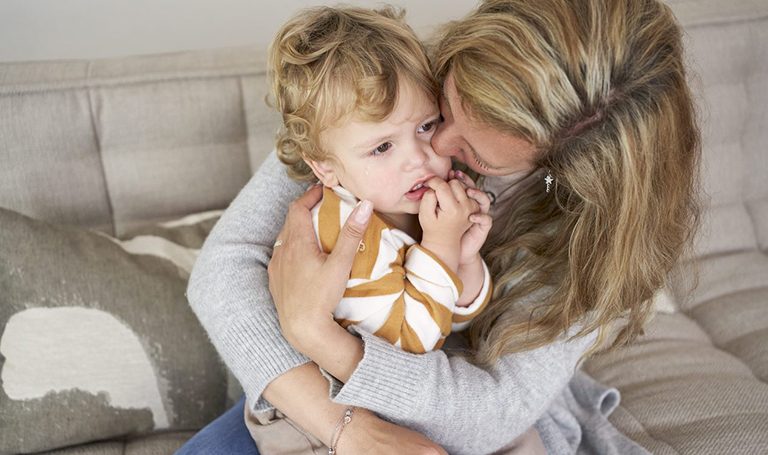
It’s okay to cry—letting your child know they can feel sad
It’s a fact of life: babies and toddlers cry. Here are some ways to help your toddler work through big feelings.

13 - 15 Months
The do’s and don’ts of saying ‘no’
Describing for your child the behavior you do want to see avoids reinforcing what you don't want them to do. Here's how to say "no" less frequently.

13 - 15 Months
4 early gravity lessons
They drop it, you pick it up, they drop it again. There is nothing toddlers love more than playing with gravity. Here are four experiments to try.

16 - 18 Months
Collecting and transporting
Walking while carrying or pushing an object requires significant coordination and motor skills. Learn how pushing and transporting benefit your toddler.

16 - 18 Months
Throwing and rolling and flinging, oh my! How to support your baby’s love of making balls move
Throwing, rolling, and flinging are all a natural part of how toddlers play and are early lessons in cause and effect. Here are 6 safe ways to practice.

16 - 18 Months
16 ideas for screen-free play on a plane
If you dread toddler travel, the first step toward a less stressful experience might be to reframe how you think about it. Here are 16 ideas to get you started.

16 - 18 Months
When will my toddler learn to sort?
Sorting is the beginning of pattern recognition, a foundational math skill. Here are some ways to practice sorting with your toddler.

13 - 15 Months
Embrace this mindset and time with your toddler gets 100 times better, by Lovevery CEO Jessica Rolph
The key to cutting down on frustration for both you and your toddler is to redefine what it means to get things done. These five mantras will help you do that.

13 - 15 Months
Abracadabra! The magic behind Montessori toy introduction
Watch Lovevery CEO Jessica Rolph and Montessori expert Jody Malterre introduce the Flexible Wooden Stacker and show the developmental concepts it supports.

16 - 18 Months
The case for messy sensory play: ideas for right now
In order for any of your child's individal senses to give them meaningful information about the world, they need to be linked in the brain—this is the case for getting messy.

13 - 15 Months
“Where’s your belly?” When toddlers start to identify parts of their body
Your toddler's self-awareness is growing, and they may soon recognize their own face in the mirror. Here's how to help them begin to learn the parts of their body.

13 - 15 Months
“Throw the ball to Mama”—what’s up with the third person, anyway?
Do you speak to your toddler in the third person? "Illeism" may help your toddler develop their language skills until they understand pronouns.

13 - 15 Months
Art, science, and fine motor: water play checks all the boxes
Water play helps toddlers create art, learn science, and develop fine motor skills. Here are 10 water play activities you can do with your toddler.